
TL;DR: The best mold remediation company in Little Falls, MN is the one that holds IICRC AMRT certification, uses proper containment and HEPA filtration during the job, and has an independent third party verify the air and surfaces are clear when the work is done. Price matters less than whether the company can prove the mold is actually gone, not just painted over.
If you just found a musty smell in your basement or a contractor pointed out staining on your sill plate, you’re probably typing “best mold remediation company near me” into your phone right now, half-panicked and not sure who to trust. Little Falls doesn’t have a long list of mold specialists, which makes the decision feel higher-stakes, not lower. Here’s how to actually evaluate your options instead of just picking whoever answers the phone first.
What Separates a Good Mold Remediation Company From a Bad One?
A good mold remediation company follows the IICRC S520 standard for containment, removal, and drying, and proves the job worked with post-remediation testing. A bad one sprays bleach, tears out some drywall, and leaves without checking whether spores are still airborne or hiding behind the next stud bay.
The difference shows up in four places: certification, containment practice, verification method, and whether you get a written scope before any demolition starts. Walk through each one before you sign anything.
Does the Company Hold IICRC AMRT Certification?
IICRC AMRT (Applied Microbial Remediation Technician) certification means a technician completed structured training on mold biology, containment design, and safe removal under the Institute of Inspection, Cleaning and Restoration Certification’s S520 standard, the reference document most mold remediation work in the U.S. is measured against.
Ask directly: “Is the technician coming to my house AMRT certified?” Not just the company, the person doing the work. Heritage Restoration LLC holds IICRC AMRT certification, and it’s worth confirming that credential with any company you’re considering in the Little Falls area before work begins.
Certification alone doesn’t guarantee a good outcome, but its absence is a real red flag. S520 training is specifically where a technician learns why cutting corners on containment turns a one-room problem into a whole-house problem.
How Should Containment and HEPA Filtration Actually Work?
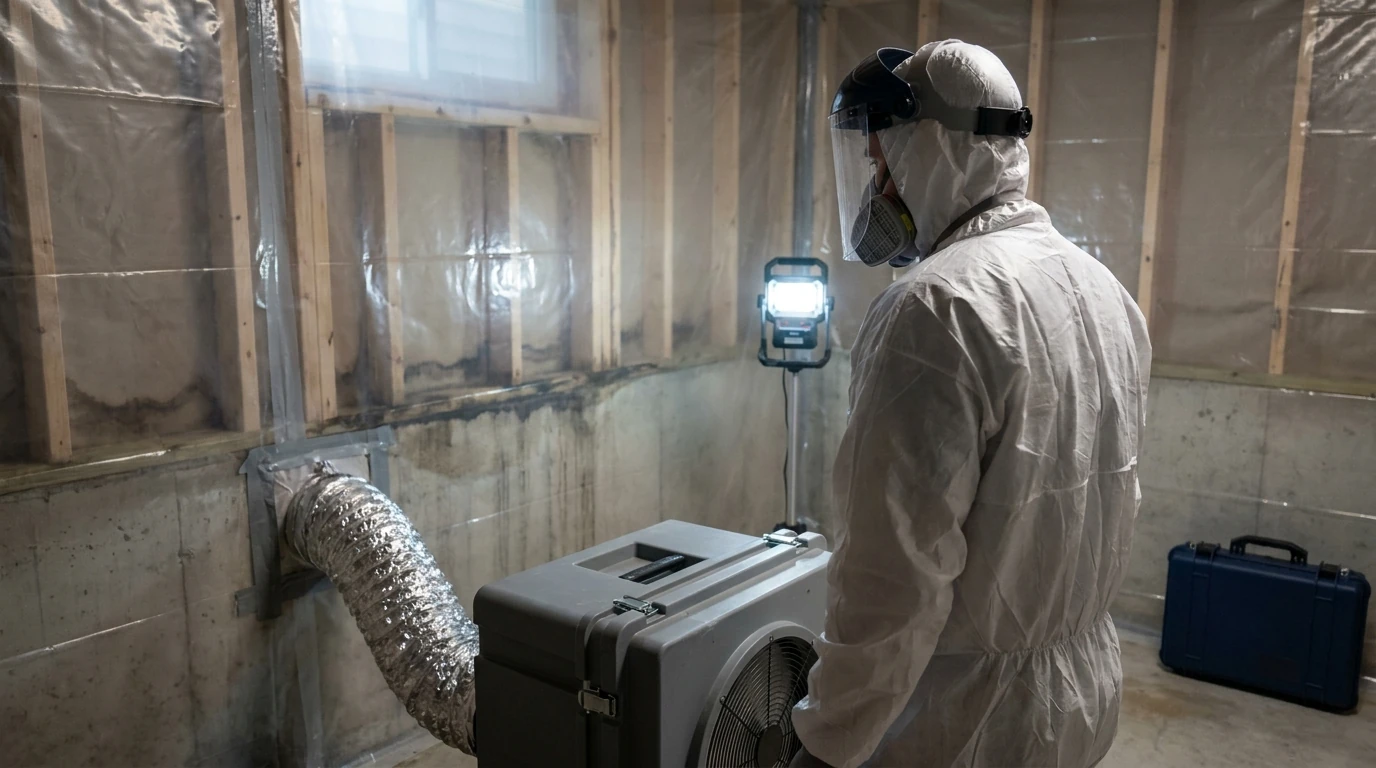
Proper containment means the work area is sealed off with poly sheeting and run under negative air pressure, so disturbed mold spores can’t travel into the rest of your Little Falls home while the crew is working.
Here’s what that looks like in practice: the crew builds a physical barrier around the affected area, often from floor to ceiling, before they cut into a single piece of drywall. A HEPA-filtered air scrubber runs continuously inside that containment, pulling air through a filter fine enough to capture mold spores before it exhausts outside or through a window. Workers wear a full Tyvek suit, N95 or P100 respirator, and gloves, not because the job is glamorous, but because disturbed mold is genuinely something you don’t want to breathe.
If a company tells you they’ll “just wipe it down and spray some Concrobium” without mentioning containment at all, that’s a company planning to disturb mold with no plan for where the spores go. For a home near the Mississippi River where basements see seasonal humidity swings, that matters even more. The EPA’s guide to mold, moisture, and your home covers why containment during removal is non-negotiable, not optional.
Will They Verify the Job Worked When It’s Done?
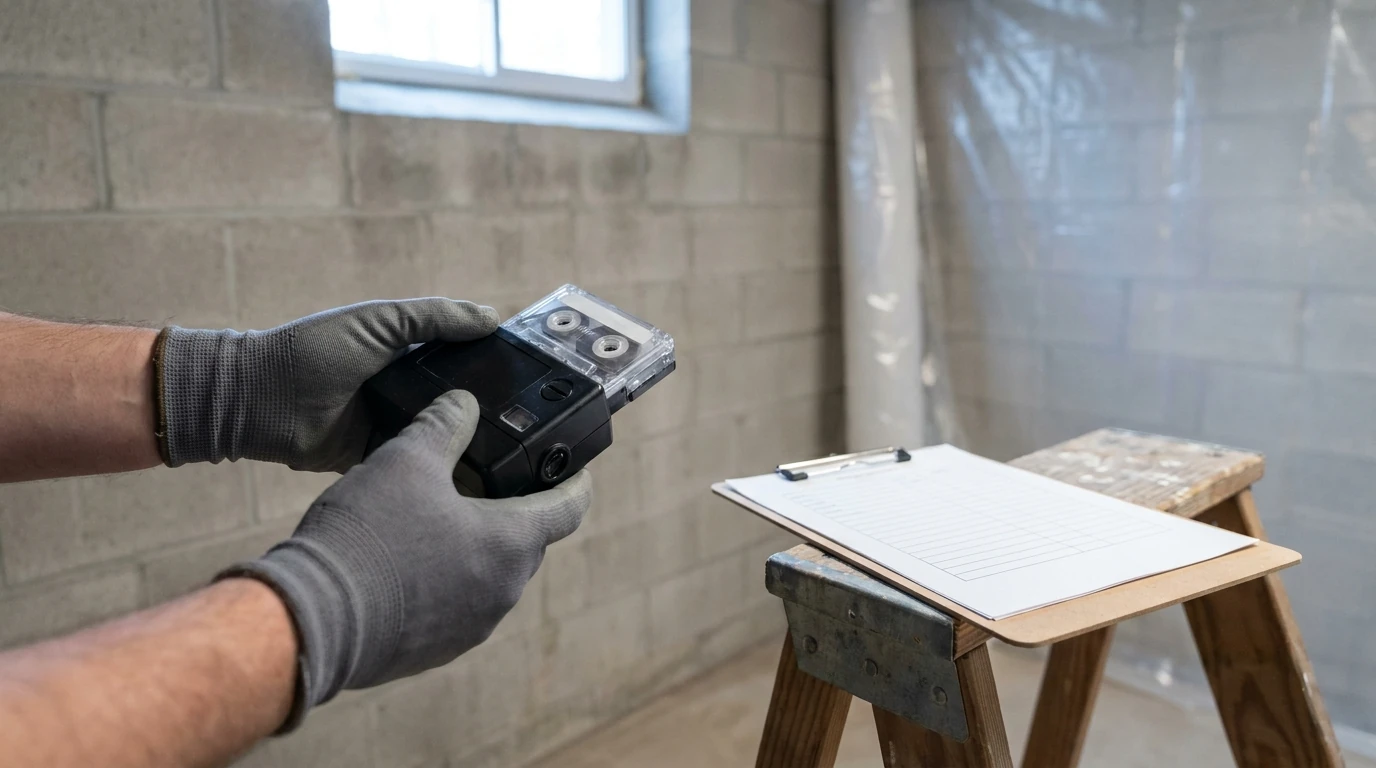
The best mold remediation companies arrange for an independent third-party inspector, not their own technician, to collect air or surface samples after the work is finished and confirm the space passes clearance testing.
This is the step a lot of “mold-and-run” operators skip entirely, because it’s the one that can’t be faked. A company grading its own homework isn’t verification. An independent indoor air quality professional collecting samples and sending them to an accredited lab is. Ask upfront: “Who does your post-remediation verification, and is it the same company doing the removal?”
This is also where mold inspection and testing and mold remediation are two different services that work together, not one service doing double duty. The inspection confirms the scope before work starts; the independent clearance test confirms it’s actually resolved after. If you’re still at the “is this even mold” stage, our guide on how to test for mold walks through DIY kits versus a professional inspection, and these signs of hidden mold covers what to look for behind walls and under flooring before you call anyone.
What Should Be in a Written Scope Before Work Starts?
A written scope should list the exact square footage of affected material being removed, the containment plan, the equipment being used, and the price, all before a single wall gets opened.
Verbal estimates or “we’ll figure it out as we go” pricing is how homeowners end up with surprise change orders mid-job. A written scope also protects you if you’re filing an insurance claim, since adjusters want documentation that matches what was actually done, not a vague invoice after the fact. The Minnesota Department of Health also publishes guidance worth reading on remediation expectations if you want a second source before you sign.
Ask for the scope in writing, with the containment and verification steps spelled out, before you agree to a start date. A company confident in its process will hand this over without hesitation.
If you’re weighing mold remediation against general restoration work after a water event, it helps to understand the distinction between remediation and removal first: removal just takes the visible mold away, while remediation addresses the moisture source and verifies the air is clear, which is the actual IICRC-recommended standard. For the broader question of vetting any restoration company in town, not just for mold, see our guide on choosing a restoration company in Little Falls.
When you’re ready to get a scope written up, request a mold inspection first if you’re not sure of the extent, or go straight to mold remediation if the source and scope are already clear.
About Heritage Restoration LLC
Heritage Restoration LLC employs IICRC-certified technicians based in Little Falls, MN (license BC807677), founded in 2023. The team holds IICRC certifications across water, fire and smoke, structural drying, and mold (AMRT), and is EPA Lead-Safe certified. Heritage operates 24/7 and serves Little Falls, St. Cloud, Brainerd, and surrounding central Minnesota communities with water, fire, mold, and storm restoration services, along with reconstruction and general contracting.
Need help now? Call Heritage Restoration LLC at (320) 733-8868.