
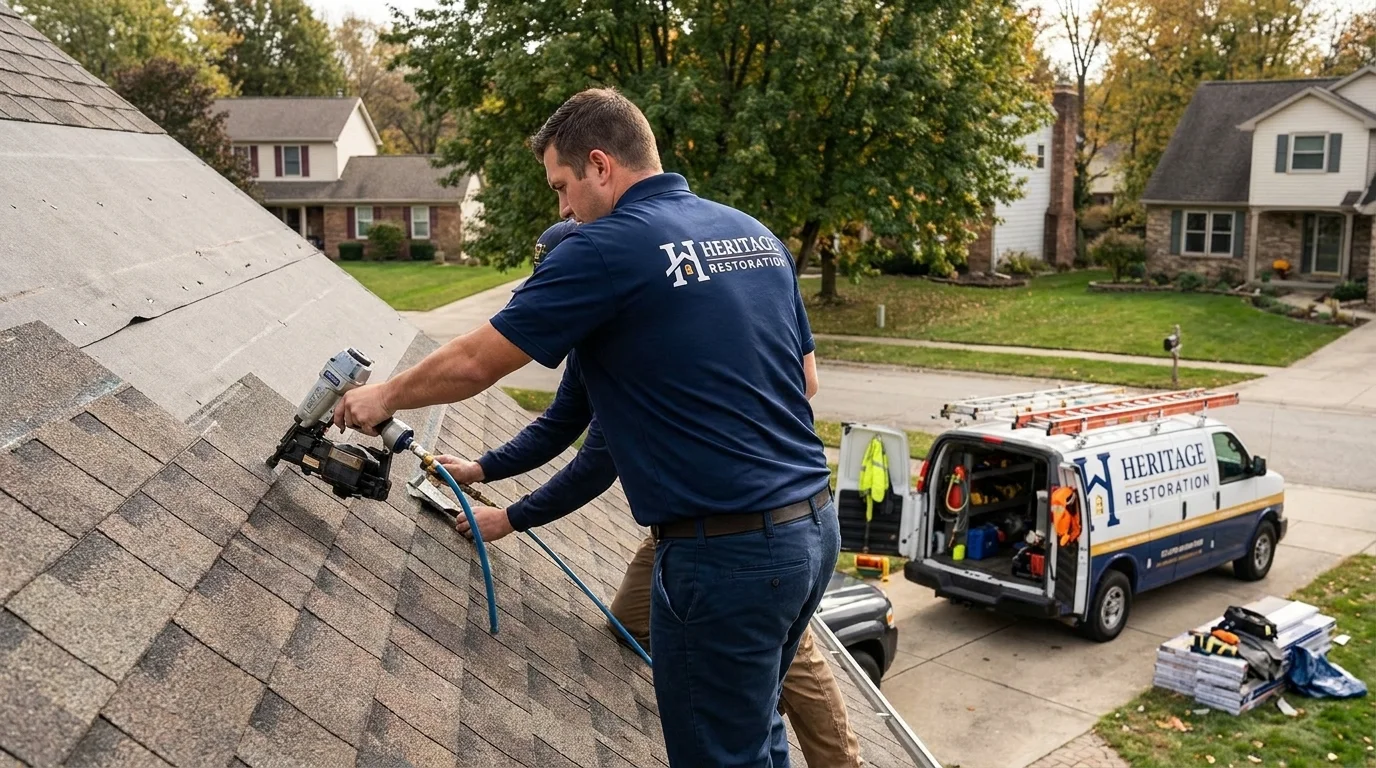
Roofing Installation and Replacement in Little Falls
Roofing installation and replacement in Little Falls and surrounding areas. IICRC-certified, insurance billing accepted. Call (320) 733-8868.
A roof that looks fine from the curb can be hiding failed underlayment, cracked decking, or corroded flashing that lets water migrate into your attic insulation and wall cavities long before a stain appears on the ceiling. By the time a homeowner in central Minnesota notices a drip, the damage has often been working for months through freeze-thaw cycles that widen every small gap. Roofing installation and replacement is not a patch job, it is a full system replacement that closes those hidden pathways before they become a structural problem.
What roofing installation and replacement actually involves
A full roof replacement means removing every layer of existing material down to the roof deck, inspecting and repairing that deck before anything goes back on, and then building the roofing system back up in the correct sequence: ice-and-water shield at the eaves and valleys, synthetic underlayment across the field, drip edge, and then the finish material, typically architectural asphalt shingles in this region, though metal and impact-resistant options are available depending on slope, exposure, and insurance requirements.
The work is not just about the shingles. Flashing at chimneys, skylights, and wall intersections is where most leaks originate, and replacing those details correctly requires sheet metal work, not just caulk. Ridge ventilation, soffit intake, and attic airflow are also evaluated during installation because improper ventilation shortens shingle life and can void manufacturer warranties.
A typical residential replacement on a standard two-story home in Morrison County takes one to two days for the installation crew, plus time for the pre-job inspection, material delivery, and permit coordination with the city or county depending on jurisdiction.
Our process
-
Roof inspection and scope development. Before a single shingle comes off, the deck, flashing, fascia, soffits, and attic ventilation are assessed. Soft spots, delaminated decking, and corroded metal are documented so nothing is discovered mid-job.
-
Material selection and permit coordination. Shingle grade, color, and impact-resistance rating are confirmed. Heritage Restoration LLC holds contractor license #BC807677 and coordinates required permits with the applicable local authority before work begins.
-
Full tear-off and deck preparation. All existing shingles, underlayment, and deteriorated flashing are removed. Decking is inspected board by board. Damaged sections are replaced with matching thickness plywood or OSB and fastened to code before any new material is applied.
-
System installation. Ice-and-water shield is run at all eaves, valleys, and penetrations, critical in a climate where ice dams are a recurring problem. Synthetic underlayment covers the field, drip edge is set, and shingles are installed to manufacturer specifications for fastener pattern and exposure. All flashing is replaced in metal, not reused.
-
Final inspection and cleanup. The finished roof is walked and photographed. A magnetic roller is run over the yard and driveway to collect fasteners. Gutters are cleared of debris from the tear-off, and the written completion documentation is provided for your insurance file or warranty registration.
What separates a good roof replacement from a bad one
The most common failure point in residential roofing is skipping or shortcutting the ice-and-water shield. In Little Falls and the surrounding Morrison County area, January through March brings repeated freeze-thaw cycles that drive ice dams along the eave line. Without a full membrane at the eaves, water backing up under the shingles has a direct path to the decking and into the structure. Code minimums are a floor, not a target.
Flashing is the second place where shortcuts show up quickly. Reusing old step flashing at a dormer or chimney saves thirty minutes on install day and creates a callback within two or three seasons. Good operators replace all penetration flashing as a standard part of the scope, not an add-on.
Insurance adjusters reviewing storm-damage claims look specifically at the age and condition of the existing roof, the impact-resistance rating of the replacement material, and whether the scope includes all damaged components, not just the shingles. Omitting soffit damage, gutter damage, or deteriorated fascia from a storm claim is a common documentation gap that leaves money on the table for the homeowner.
Finally, ventilation is frequently ignored on replacement jobs. A new roof installed over an attic with inadequate exhaust will see premature shingle failure and potential moisture accumulation in the insulation, which can create conditions favorable to mold growth over time.
What does roofing installation and replacement cost?
Typical costs for residential roofing vary significantly based on roof size, pitch, material grade, and the extent of deck or structural repairs needed. Most homeowners pay somewhere in the ranges below for industry-standard architectural shingle work; these are typical market figures, not Heritage Restoration LLC quotes.
| Scenario | Typical range |
|---|---|
| Small single-story home (up to 1,200 sq ft footprint) | $6,000 - $10,000 |
| Mid-size two-story home (1,200 - 2,000 sq ft footprint) | $10,000 - $18,000 |
| Large or complex roofline with multiple penetrations | $18,000 - $30,000+ |
| Partial replacement or isolated section | $3,000 - $7,000 |
| Deck repair or replacement (per square) | $75 - $150 per sheet |
| Impact-resistant shingle upgrade (Class 3 or 4) | Add 15% - 25% to base cost |
Every loss and every roof is different. Heritage Restoration LLC provides a written scope of work before any work begins so you know exactly what is included. Homeowners insurance typically covers roof replacement when damage results from a covered peril such as hail, wind, or a fallen tree, it does not typically cover replacement due to age or wear alone, though a thorough adjuster inspection can identify storm damage that is not obvious from the ground.
Seasonal and regional considerations
Central Minnesota’s roofing season runs roughly April through October, with the most reliable installation windows in late spring and early fall when temperatures stay above the minimum threshold for shingle adhesion. Shingles installed in temperatures below about 40°F require hand-sealing of each tab to achieve proper bonding, and some manufacturers restrict warranty coverage for cold-weather installs without that step documented.
Ice dam damage is the most common driver of emergency roof inspections in this region. A winter with heavy snowfall followed by a warm spell can reveal underlayment failures that were invisible in summer. If you are scheduling a replacement after a damage event, getting a written scope completed before the next winter is the priority.
Service area
Heritage Restoration LLC is based in Little Falls, MN and serves homeowners and property managers throughout Morrison County and the surrounding region, including Pierz, Royalton, Motley, Randall, and neighboring communities. The city-specific pages for each area link back to this page for full service details.
If you have noticed granule loss in your gutters, daylight visible from the attic, or a ceiling stain that appeared after the last heavy rain, the right next step is a documented roof inspection before the problem compounds. Call Heritage Restoration LLC at (320) 733-8868 to schedule your roof assessment and receive a written scope before any work begins.
Services We Handle
- Roof Repair
Frequently Asked Questions
Does homeowners insurance cover roof replacement in Minnesota?
How do I know if I need a full replacement versus a repair?
What is an ice-and-water shield, and why does it matter in this climate?
What is a Class 4 impact-resistant shingle, and does it affect my insurance premium?
How long does a full roof replacement typically take from inspection to completion?
Looking for the best roofing installation and replacement company in Little Falls?
Heritage Restoration LLC provides licensed and insured roofing installation and replacement in Little Falls, MN and the surrounding area, and has served local property owners since 2023. We answer calls 24/7 — call (320) 733-8868 for immediate help.
Need Roofing Installation and Replacement now?
We respond 24/7 across Little Falls and surrounding MN cities.
Related Coverage
- Our Restoration Services
- Contact Heritage Restoration LLC
- Roofing Installation and Replacement in Albany
- Roofing Installation and Replacement in Avon
- Roofing Installation and Replacement in Baxter
- Roofing Installation and Replacement in Brainerd
- Roofing Installation and Replacement in Elmdale
- Roofing Installation and Replacement in Flensburg
- Roofing Installation and Replacement in Foley
- Roofing Installation and Replacement in Fort Ripley
- Roofing Installation and Replacement in Harding
- Roofing Installation and Replacement in Long Prairie
- Roofing Installation and Replacement in Pierz
- Roofing Installation and Replacement in Randall