
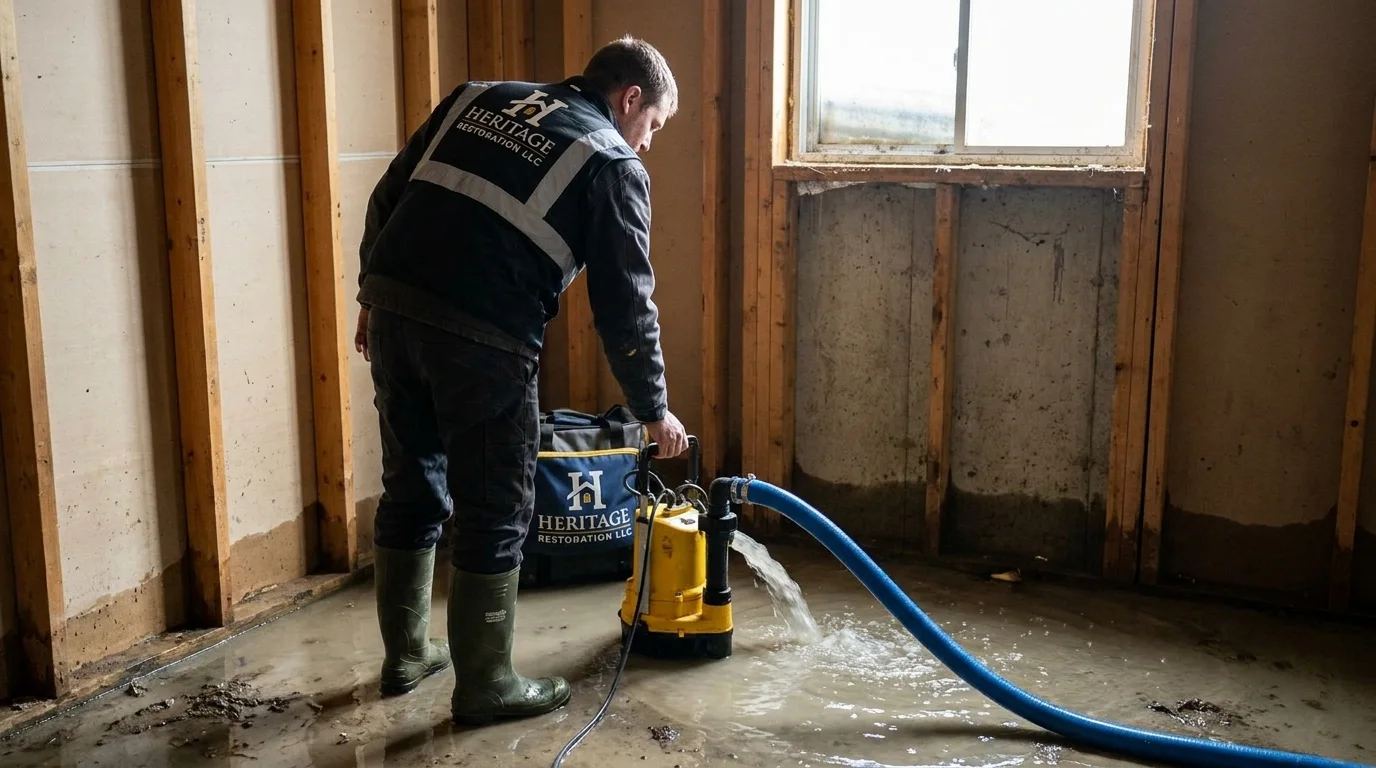
Emergency Basement Flooding Cleanup in Little Falls
Emergency basement flooding cleanup in Little Falls and surrounding areas. IICRC-certified, insurance billing accepted. Call (320) 733-8868.
Basement flooding emergency in Little Falls? Call now for emergency service before the water sits long enough to reach framing, insulation, and anything stored on the floor. A flooded basement rarely stays confined to the slab. Within hours, water wicks up drywall, soaks into sill plates, and pools under carpet pad where it keeps materials wet long after the surface looks dry. The longer standing water sits against a foundation wall, the more likely it is to push moisture into block cores and framing that a shop vac alone will never reach.
What Basement Flooding Cleanup actually involves
Basement water removal starts with getting standing water out fast, usually with truck-mounted or submersible pumps depending on depth, followed by extraction equipment built for concrete, carpet, and tile. From there the real work is drying: Little Falls basements are often poured concrete or block foundations built into clay-heavy soil, which means moisture doesn’t just evaporate on its own. Air movers and commercial dehumidifiers run for several days, and moisture readings in the concrete, framing, and drywall get logged daily until materials hit a dry standard, not just a dry look. Depending on how the water entered (sump failure, groundwater seepage, a cracked foundation wall, or a backed-up floor drain) the source gets categorized, because clean groundwater is handled very differently than water carrying sewage or contaminants.
Our process
- Water source identification. Before extraction starts, we confirm whether the water came from a sump pump failure, foundation seepage, a plumbing line, or sewer backup, since that determines the contamination category and what protective steps are needed.
- Extraction and content triage. Standing water is pumped out, and anything stored on the basement floor (boxes, furniture, finished flooring) gets assessed on the spot for what can be salvaged versus what needs to go.
- Controlled demolition where needed. Wet drywall below the flood line, soaked baseboard, and saturated carpet pad are removed to stop wicking and expose the framing and block behind them for drying.
- Structural drying and monitoring. Air movers and dehumidifiers are positioned based on the room’s layout, and moisture content in concrete, studs, and remaining drywall is tracked daily against a drying goal, per IICRC S500 guidelines.
- Clearance and reassembly. Once materials test dry, we document it in writing before any drywall, trim, or flooring goes back, so there’s a clear record for the insurance file.
What separates a good basement flooding cleanup response from a bad one
The most common mistake is treating a flooded basement like a surface cleanup job: pull the water, run a couple of fans, call it done. What that misses is moisture trapped behind drywall and inside concrete block cores, which can keep feeding mold growth for weeks after the floor looks dry. Mold can begin colonizing damp wall cavities in as little as 24 to 48 hours, so skipping moisture mapping isn’t just sloppy, it sets up a second problem. Adjusters also look for daily drying logs and photo documentation; without them, a claim can get challenged on whether the drying was actually completed or just assumed. A thorough response cuts drywall at the right height (above the flood line, not an arbitrary foot), checks for hidden water under vinyl or laminate flooring, and verifies the sump pump or drainage issue that caused the flood in the first place, since drying a basement without fixing the cause just delays the next loss.
What does Basement Flooding Cleanup cost?
Costs vary with how much water came in, how long it sat, and whether contaminated water was involved, so every loss gets a written scope from Heritage Restoration LLC before work begins rather than a guess over the phone. Homeowners insurance typically covers sudden and accidental water damage, such as a sump pump or appliance failure, but often excludes gradual seepage or flooding from external groundwater unless a separate flood policy is in place, so it’s worth checking your declarations page early.
| Scenario | Typical range |
|---|---|
| Minor seepage, small area, clean water | $800 - $2,200 |
| Sump pump failure, partial basement | $2,000 - $5,500 |
| Full basement flood, clean water | $4,000 - $9,000 |
| Basement flood with contaminated/sewage water | $6,000 - $15,000+ |
| Flooring and drywall replacement after drying | $1,500 - $6,000 |
Seasonal & regional considerations
Central Minnesota’s freeze-thaw cycle is a frequent trigger for basement flooding in Little Falls, since spring snowmelt combined with still-frozen ground sends water toward foundations faster than it can drain away. Heavy spring and summer storms add a second risk window, particularly for homes with older sump systems or foundations poured before modern drain tile and vapor barrier practices became standard. Basements in homes built before the 1980s, a common age range in this area, are more likely to have block foundations without exterior waterproofing, which makes seepage after heavy rain more likely than in newer construction.
Service area
Heritage Restoration LLC responds to basement flooding throughout Little Falls and the surrounding Morrison County communities, including homes along the Mississippi and Swan River corridors where older foundations and higher water tables are common.
If your basement has standing water right now, don’t wait on the drying, call Heritage Restoration LLC and we’ll get extraction equipment on-site and start the drying process before the damage spreads further into your home’s structure.
Frequently Asked Questions
Does homeowners insurance cover basement flooding cleanup?
How do I know if my basement water is clean or contaminated?
How long does it take to dry out a flooded basement?
Do you remove drywall and flooring, or just dry what's there?
What should I do with a flooded basement while waiting for help to arrive?
Looking for the best basement flooding cleanup company in Little Falls?
Heritage Restoration LLC provides licensed and insured basement flooding cleanup in Little Falls, MN and the surrounding area, and has served local property owners since 2023. We answer calls 24/7 — call (320) 733-8868 for immediate help.
Need Basement Flooding Cleanup now?
We respond 24/7 across Little Falls and surrounding MN cities.
Related Coverage
- Our Restoration Services
- Contact Heritage Restoration LLC
- Restoration Services in Albany
- Restoration Services in Avon
- Restoration Services in Baxter
- Restoration Services in Brainerd
- Restoration Services in Elmdale
- Restoration Services in Flensburg
- Restoration Services in Foley
- Restoration Services in Fort Ripley
- Restoration Services in Harding
- Restoration Services in Long Prairie
- Restoration Services in Pierz
- Restoration Services in Randall