
Emergency Smoke Damage Restoration in Little Falls
Emergency smoke damage restoration in Little Falls and surrounding areas. IICRC-certified, insurance billing accepted. Call (320) 733-8868.
Smoke damage lingering days after the fire trucks leave? Call now for emergency smoke damage restoration in Little Falls, (320) 733-8868.
A fire doesn’t have to touch a room for smoke to ruin it. Soot particles are small enough to work into drywall pores, carpet fibers, and HVAC ductwork within hours, and the acidic residue left behind keeps etching metal and discoloring finishes long after the flames are out. Left untreated, that residue turns a one-day cleanup into a weeks-long repaint and re-drywall job. The longer smoke sits, the more surfaces it bonds to permanently.
What Smoke Damage Restoration actually involves
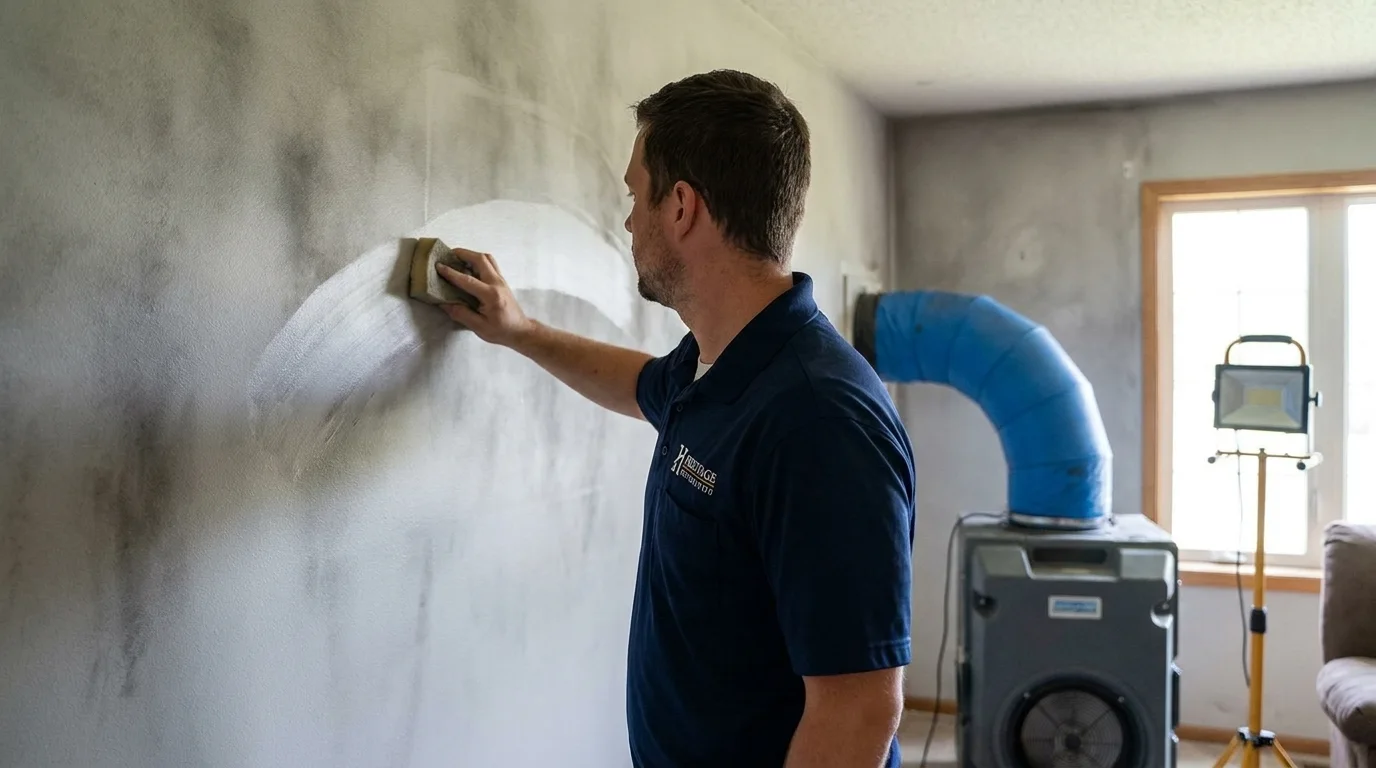
Smoke damage restoration is a different discipline than fire damage reconstruction, though the two often happen together. Where fire repair rebuilds what burned, smoke restoration deals with everything the fire touched indirectly: ceilings two rooms away, closets with the door shut, return-air ducts that pulled smoke through the whole house in minutes. The work starts with identifying what type of smoke residue is present, because wet smoke from a smoldering fire behaves nothing like dry smoke from a fast-burning fire, and each calls for a different cleaning agent and technique. Equipment on a typical job includes HEPA air scrubbers, hydroxyl or ozone generators (used only in unoccupied spaces), dry chemical sponges for porous surfaces, and thermal foggers that reach into cracks and HVAC cavities the way smoke originally did. A single-room job might wrap in a day; a whole-house loss with HVAC contamination usually runs several days to account for odor treatment dwell time.
Our process
- Soot characterization. We identify whether the residue is protein-based (common after kitchen or appliance fires), dry synthetic smoke, or wet smoke from a slow-burning source, since the wrong cleaning agent can set stains permanently instead of lifting them.
- Pre-cleaning and HEPA air scrubbing. Loose soot gets vacuumed with HEPA-filtered equipment before anything else, so wet cleaning doesn’t grind particles deeper into fabric and drywall.
- Surface cleaning and thermal fogging. Walls, ceilings, and trim are cleaned with residue-appropriate solutions, and thermal fogging drives a deodorizing agent into the same gaps smoke penetrated, including wall cavities and duct runs.
- Content cleaning or pack-out. Furniture, textiles, and belongings that can be saved are cleaned on-site or packed out for ultrasonic or ozone treatment away from the structure.
- Odor sealing and final verification. Porous surfaces that still hold odor after cleaning get sealed with an odor-blocking primer before repaint, and we walk the space with the homeowner before calling it closed.
What separates a good smoke damage response from a bad one
The most common mistake is treating smoke damage like a simple cleaning job: wipe the visible soot, run an air freshener, call it done. That approach misses residue inside HVAC ductwork, which recirculates odor every time the system runs, and it skips the acidic soot sitting in carpet pad or behind outlet covers where it keeps corroding metal and discoloring fabric for months. Insurance adjusters look for documentation that the HVAC system was inspected and cleaned if smoke traveled through it, that odor-causing residue was neutralized rather than masked, and that cleaning agents matched the soot type so finishes weren’t damaged further. A thorough response also tests whether a surface needs encapsulation versus full replacement, since painting over unsealed soot almost always lets the odor bleed back through within weeks.
What does Smoke Damage Restoration cost?
Costs depend heavily on how far the smoke traveled, what type of residue is involved, and whether HVAC or contents cleaning is needed. Most homeowners insurance policies that cover fire damage also cover associated smoke damage cleanup, though coverage details vary by policy and carrier. Every loss is different, and Heritage Restoration LLC provides a written scope of work before any cleaning begins so there are no surprises once the job starts.
| Scenario | Typical range |
|---|---|
| Light smoke odor, single room | $300 - $900 |
| Moderate smoke/soot, multiple rooms | $1,500 - $4,000 |
| Whole-house smoke damage after a structure fire | $5,000 - $15,000+ |
| Wildfire smoke infiltration, no fire on property | $800 - $2,500 |
| HVAC duct smoke contamination cleaning | $450 - $1,200 |
Seasonal & regional considerations
Central Minnesota winters mean more wood stove and fireplace use, and a poorly drafting chimney or puffback from an oil furnace can fill a home with fine soot in minutes even without an open flame. In late summer, drifting wildfire smoke from regional fires can settle into homes through air intakes and open windows, leaving an odor without any fire having occurred on the property at all. Humidity swings between seasons can also reactivate odor in porous materials that weren’t fully sealed the first time, which is why we test rather than guess before calling a job finished.
Service area
Heritage Restoration LLC responds to smoke damage calls in Little Falls and throughout the surrounding Morrison County area. Our license number is BC807677.
If smoke has settled into your home’s walls, ductwork, or belongings, waiting makes the odor and the repair bigger. Call (320) 733-8868 to begin smoke and soot removal before residue sets into finishes you’d otherwise have to replace.
Frequently Asked Questions
Does homeowners insurance cover smoke damage restoration?
What's the difference between protein soot and synthetic smoke residue?
How long does smoke odor cleanup typically take?
Why does smoke smell come back after a room has been cleaned and repainted?
Do I need smoke damage cleanup if the smoke drifted in from a wildfire and there was no fire at my property?
Looking for the best smoke damage restoration company in Little Falls?
Heritage Restoration LLC provides licensed and insured smoke damage restoration in Little Falls, MN and the surrounding area, and has served local property owners since 2023. We answer calls 24/7 — call (320) 733-8868 for immediate help.
Need Smoke Damage Restoration now?
We respond 24/7 across Little Falls and surrounding MN cities.
Related Coverage
- Our Restoration Services
- Contact Heritage Restoration LLC
- Restoration Services in Albany
- Restoration Services in Avon
- Restoration Services in Baxter
- Restoration Services in Brainerd
- Restoration Services in Elmdale
- Restoration Services in Flensburg
- Restoration Services in Foley
- Restoration Services in Fort Ripley
- Restoration Services in Harding
- Restoration Services in Long Prairie
- Restoration Services in Pierz
- Restoration Services in Randall
- The Fire Damage Restoration Process, Explained