Fire damage rarely stops when the flames go out. Smoke keeps moving through a structure for hours, soot settles into surfaces you haven’t touched yet, and water from suppression efforts begins soaking into framing and flooring while you’re still standing in the driveway. The restoration process that follows a house fire typically unfolds across six distinct phases: emergency stabilization, assessment, water and smoke mitigation, structural cleaning, odor neutralization, and rebuild. Understanding each phase before you’re in the middle of one helps you ask better questions, catch shortcuts, and protect your claim.
What Happens to a Home During a Fire (and Right After)
Most people picture fire damage as charred walls and missing ceilings. That’s the visible part. What’s harder to see is what smoke does in the minutes and hours after ignition.
Smoke is not uniform. It separates into wet smoke residue from slow-burning, low-oxygen fires (common in smoldering upholstered furniture) and dry smoke residue from fast, high-temperature burns. Wet smoke leaves a sticky, pungent film that smears when you wipe it. Dry smoke produces a powdery residue that looks almost manageable but has already penetrated porous materials like drywall paper, wood grain, and insulation batting.
At the same time, heat creates pressure differentials that push smoke into wall cavities, attic spaces, and HVAC ductwork. A fire in a kitchen can deposit detectable soot inside bedroom closets on the opposite side of the house within minutes. That’s not a worst-case scenario; it’s how air moves in a heated structure.
Then there’s suppression water. A single fire hose can discharge 100 to 250 gallons per minute. That water doesn’t drain cleanly; it wicks into subfloor sheathing, soaks through ceiling drywall into the floor below, and begins the same clock that any water intrusion event starts: mold colonization can begin within 24 to 48 hours in wet, warm conditions.
The Six Phases of Professional Fire Damage Restoration
Phase 1: Emergency Stabilization
Before any cleaning or drying begins, the structure has to be safe to enter and protected from further damage. This means boarding windows and doors where glass or frames have failed, tarping roof sections that took heat or collapse damage, and shutting off utilities if the fire department hasn’t already done so.
A structural engineer or the restoration contractor’s project manager will assess load-bearing elements before crews work inside. If a floor joist or roof rafter is compromised, the sequence matters: stabilize first, restore second.
Phase 2: Damage Assessment and Documentation
This phase runs parallel to stabilization and continues through the early days of the project. A thorough assessment covers:
- Structural integrity of framing, roof decking, and floor systems
- Scope of smoke and soot migration, including inside wall cavities and ductwork
- Moisture mapping of all areas affected by suppression water
- Contents inventory, separating salvageable items from total losses
Documentation here is not optional; it’s the foundation of your insurance claim. Photographs, moisture readings, and written scope notes create the paper trail your adjuster will use to authorize work. If a contractor skips detailed documentation and jumps straight to cleaning, that’s a flag worth paying attention to.
Phase 3: Water Mitigation
If suppression water is present, it gets addressed before smoke and soot cleaning begins. Wet materials that get sealed under soot-cleaning products or encapsulants will trap moisture and create a mold problem inside a remediated structure.
Water mitigation involves extracting standing water, placing commercial-grade drying equipment (air movers and dehumidifiers), and monitoring moisture readings daily until affected materials reach their drying targets. The IICRC S500 standard governs how drying goals are set and verified.
Phase 4: Smoke and Soot Removal
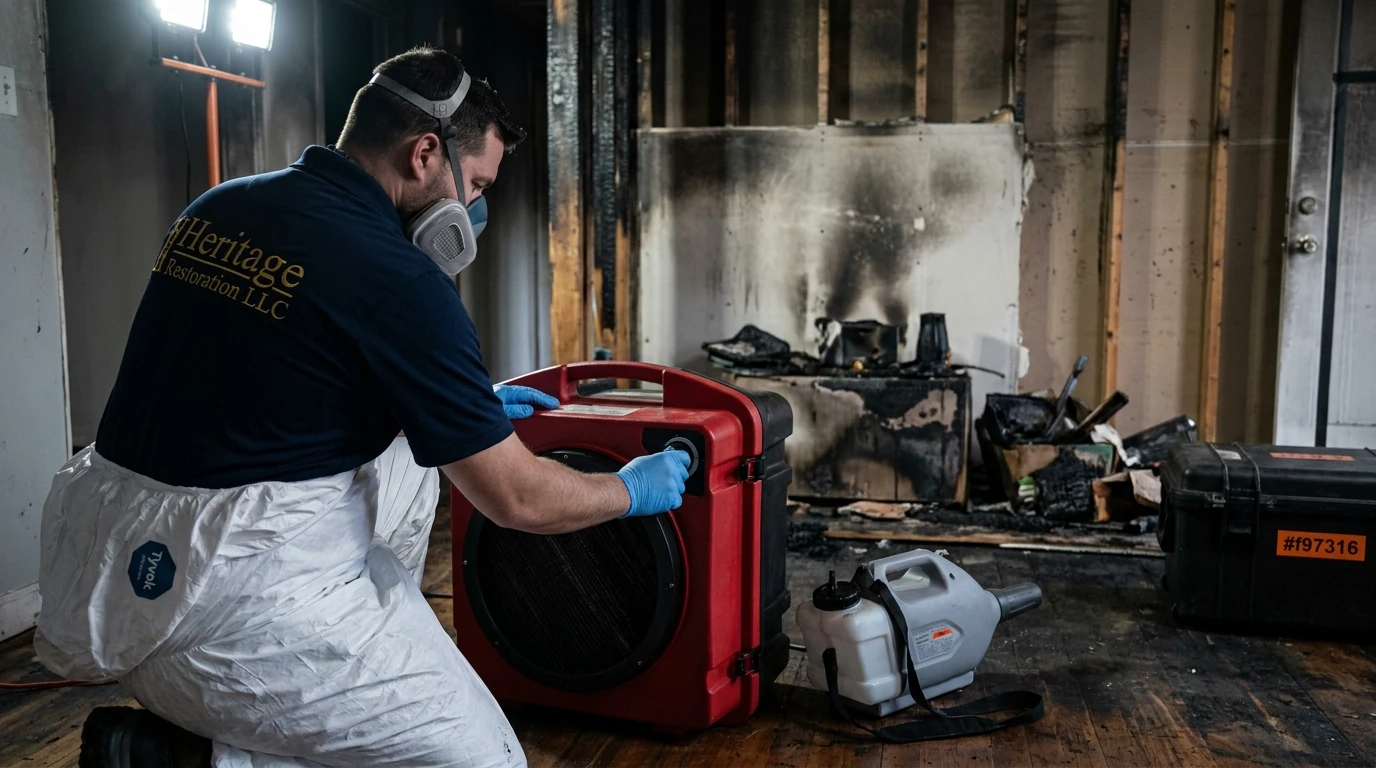
This is the most labor-intensive phase and the one most often done incompletely by inexperienced contractors. Soot removal is not cleaning in the household sense. It requires:
- Dry chemical sponges on surfaces before any wet cleaning, because wiping soot with a wet cloth first drives it deeper into porous materials
- HEPA vacuuming of loose particulate from all surfaces, including inside cabinets, on top of ceiling fan blades, and inside light fixtures
- Chemical cleaning agents matched to the type of smoke residue (protein-based residue from kitchen fires requires different chemistry than petroleum-based residue from burning synthetic materials)
- Duct cleaning and filter replacement if the HVAC system was running during or after the fire
Cabinets, framing inside wall cavities, and attic decking all need to be addressed. If a contractor’s scope only covers visible surfaces, ask specifically about concealed spaces.
Phase 5: Odor Neutralization
Smoke odor is not a surface problem. The compounds responsible for that persistent burnt smell, primarily aldehydes and phenols, bond to materials at a molecular level. Masking agents and air fresheners do not remove them.
Professional odor neutralization typically uses one or more of the following:
- Thermal fogging, which uses a heated solvent to produce a fog that penetrates the same pathways smoke traveled
- Hydroxyl generators, which produce hydroxyl radicals that break down odor compounds without requiring the space to be vacated
- Ozone treatment in unoccupied structures (ozone is effective but requires all people, pets, and plants to be out of the space during treatment)
Odor work often needs to be repeated after reconstruction, because new drywall and paint can temporarily mask residual odor that re-emerges as temperatures change seasonally.
Phase 6: Reconstruction
Once the structure is dry, clean, and deodorized, rebuild begins. Scope varies widely: a contained kitchen fire might require only cabinet replacement and repainting, while a fire that involved the attic could mean full roof decking replacement, new insulation, and re-drywalling multiple rooms.
In Minnesota, reconstruction work requires permits pulled through the local building department, and inspections are scheduled at framing, insulation, and final stages. Little Falls and the surrounding Morrison County area have a significant stock of older homes, many built before modern fire-stop requirements were in place, which can affect how smoke traveled through the structure and what code upgrades are required as part of the permitted rebuild.
What Not to Do After a House Fire
A few actions make restoration harder and can complicate your insurance claim:
- Do not attempt to clean soot yourself with household cleaners. Wet-wiping soot without proper chemistry sets the stain and can make professional cleaning less effective.
- Do not run your HVAC system before ductwork has been inspected. A contaminated system will redistribute smoke particulate throughout the house every time it cycles.
- Do not discard any damaged items before your adjuster or the restoration contractor has documented them. Thrown-away contents are difficult to claim.
- Do not assume the smell is gone because you’ve aired the house out. Odor compounds re-volatilize when temperatures rise; a house that smells clean in January may smell strongly of smoke again in July.
When to Call a Restoration Contractor
If the fire was contained to a single item (a pan on the stove, a small trash can) and the fire department was not called, you may be able to handle cleanup yourself with the right products and protective equipment. In every other situation, the scope of hidden smoke migration and suppression water makes professional assessment worth the call, even if you ultimately handle some of the work yourself.
Call sooner rather than later. The 24-to-48-hour window for water damage is real, and smoke residue that has been sitting for a week is meaningfully harder to remove than residue addressed within the first day or two.
If you’re in the Little Falls area and trying to figure out your next step after a fire, Heritage Restoration LLC handles both the fire and smoke damage sides of recovery. Reach them at (320) 733-8868.