
TL;DR: Fire damage restoration in Minnesota typically ranges from $300 to $1,500 for light smoke cleanup in a room or two, up to $100,000 or more for a whole-house rebuild after structural fire damage. The biggest cost drivers are how much square footage was charred versus just smoked, the type of soot (protein, synthetic, or wet smoke residue), whether firefighting water needs mitigation too, and how much of the rebuild falls outside what a standard insurance scope covers.
If you just walked back into a house that smells like smoke and saw a contractor’s estimate that made your stomach drop, you’re not alone. A kitchen fire that stayed contained to one wall can still leave soot on every surface in the house because smoke travels through HVAC ducts and wall cavities long before anyone smells it. Older farmhouses and balloon-frame homes common around downtown Little Falls and out toward the Mississippi River tend to spread smoke faster than newer construction, because open stud cavities let it migrate between floors. Before you sign anything, it helps to know what’s actually driving the number on that estimate.
How much does fire damage restoration cost in Minnesota?
Most Minnesota homeowners pay somewhere between a few hundred dollars for a contained smoke event and well over six figures for a structural fire that requires teardown and rebuild. There isn’t one number because “fire damage” covers everything from a scorched stovetop to a total loss.
Here’s how the typical ranges break down by scenario:
| Damage Scenario | Typical Cost Range |
|---|---|
| Light smoke odor only, no charring (1-2 rooms) | $300 - $1,500 |
| Smoke and soot cleanup plus contents cleaning, no structural repair | $2,500 - $8,000 |
| Moderate fire damage: one room charred, smoke odor throughout the house | $10,000 - $35,000 |
| Major structural damage: multiple rooms, roof or wall framing affected | $40,000 - $100,000+ |
| Whole-house fire requiring demolition and full rebuild | $100,000 - $300,000+ |
| Added water mitigation from firefighting suppression | +$1,500 - $6,000 on top of the fire scope |
Restoration contractors nationally often quote smoke-only remediation somewhere around $4 to $8 per square foot. Once structural rebuild enters the picture, that figure climbs to $15 to $30 or more per square foot. These are typical industry ranges, not a quote: every loss is scoped individually, and a written estimate should come before any work begins.
What drives the price up or down?
The single biggest factor is whether the damage is surface-level (soot and odor) or structural (charred framing, compromised drywall, damaged subfloor). Surface cleanup is labor and chemistry; structural damage adds demolition, carpentry, and code-driven rebuild costs.
A few other factors that move the number:
- Soot type. Protein residue from a grease or kitchen fire is greasy and hard to remove without specialized solvents. Synthetic residue from burning plastics and electronics is sticky and can require more aggressive cleaning agents. Wet smoke from a smoldering fire penetrates porous materials deeper than dry, fast-burning smoke.
- Square footage affected versus square footage of the home. A fire in a 10,000-square-foot commercial space scales up every line item compared with a 1,500-square-foot ranch.
- Firefighting water. Every structure fire gets hit with water, and that water has to be extracted and the structure dried to the IICRC S500 standard before rebuild starts, or you’re paying for mold remediation later.
- Contents versus structure. Cleaning and deodorizing furniture, electronics, and personal items is billed separately from structural repair, and sentimental or high-value items sometimes need pack-out and off-site ultrasonic cleaning.
- Code upgrades. If the permitting process requires updated electrical, insulation, or egress during rebuild, that’s an added cost even though it wasn’t part of the original damage.
What does insurance typically pay for fire damage restoration?
Most homeowners and commercial property policies cover fire damage, including smoke and soot cleanup, as a named peril, which means the claim itself usually isn’t in question. What gets contested is the scope: how much smoke travel actually occurred, whether contents need replacement versus cleaning, and whether code-upgrade costs are covered under an ordinance-or-law endorsement.
Minnesota’s Department of Commerce publishes guidance on filing a residential property claim, including your right to request a copy of the adjuster’s full estimate. Get that documentation. A detailed, room-by-room scope with photos and moisture or soot readings is what keeps a claim from being underpaid, and it’s also what lets a contractor’s estimate and the adjuster’s estimate actually be compared line by line instead of argued about in general terms.
Deductibles for fire claims work the same as any other covered peril: you pay the deductible, insurance covers the approved scope above it, and any upgrades beyond the approved scope come out of pocket unless your policy has specific endorsements. If you’re hiring a contractor for the rebuild portion, Minnesota’s Department of Labor and Industry has guidance on verifying license status before signing a contract.
What happens during the fire damage restoration process?
The process runs in a predictable sequence, which is also why a legitimate estimate looks different from a rough guess scribbled on a business card.
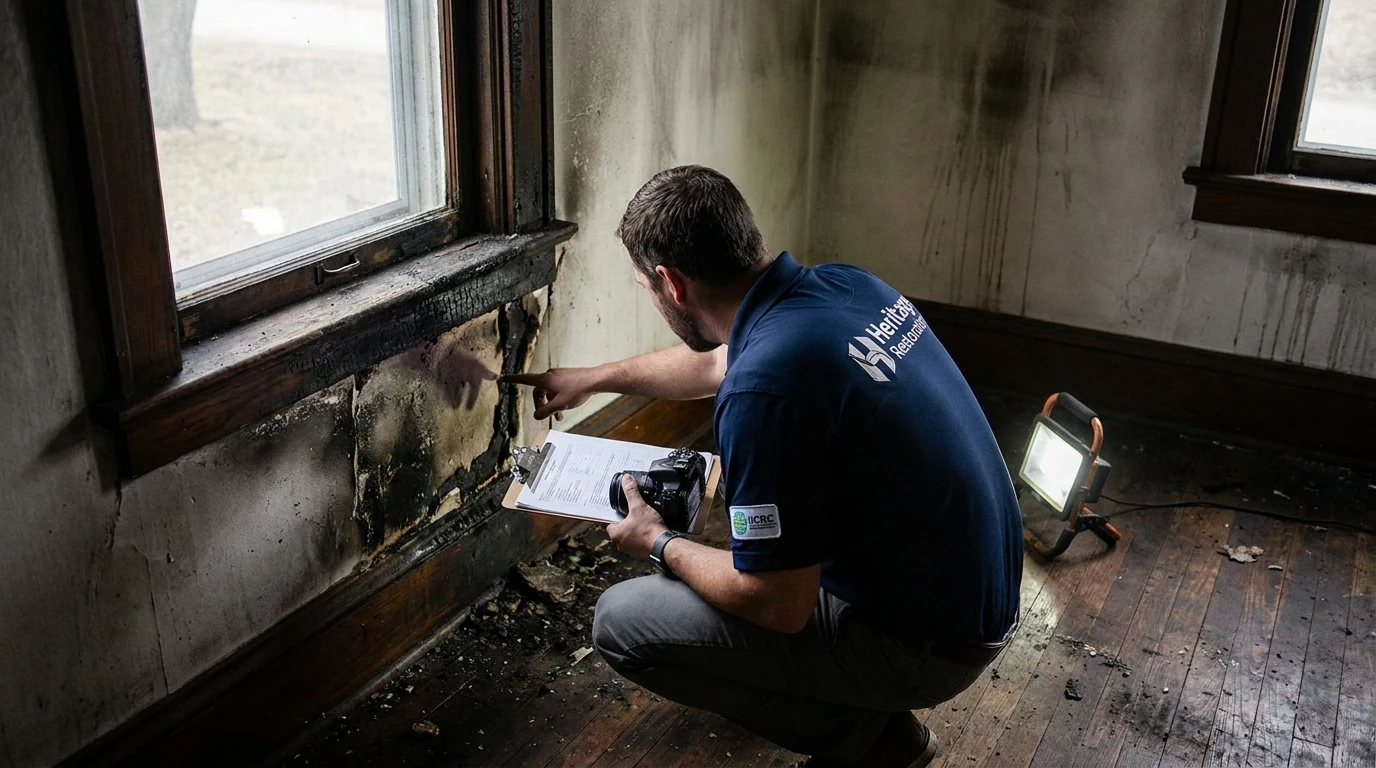
- Assessment and documentation. A technician walks the property, documents char depth, soot type, and smoke travel with photos and moisture readings, and builds a written scope.
- Board-up and water mitigation. Broken windows or roof openings get secured, and any firefighting water gets extracted before drying equipment goes in.
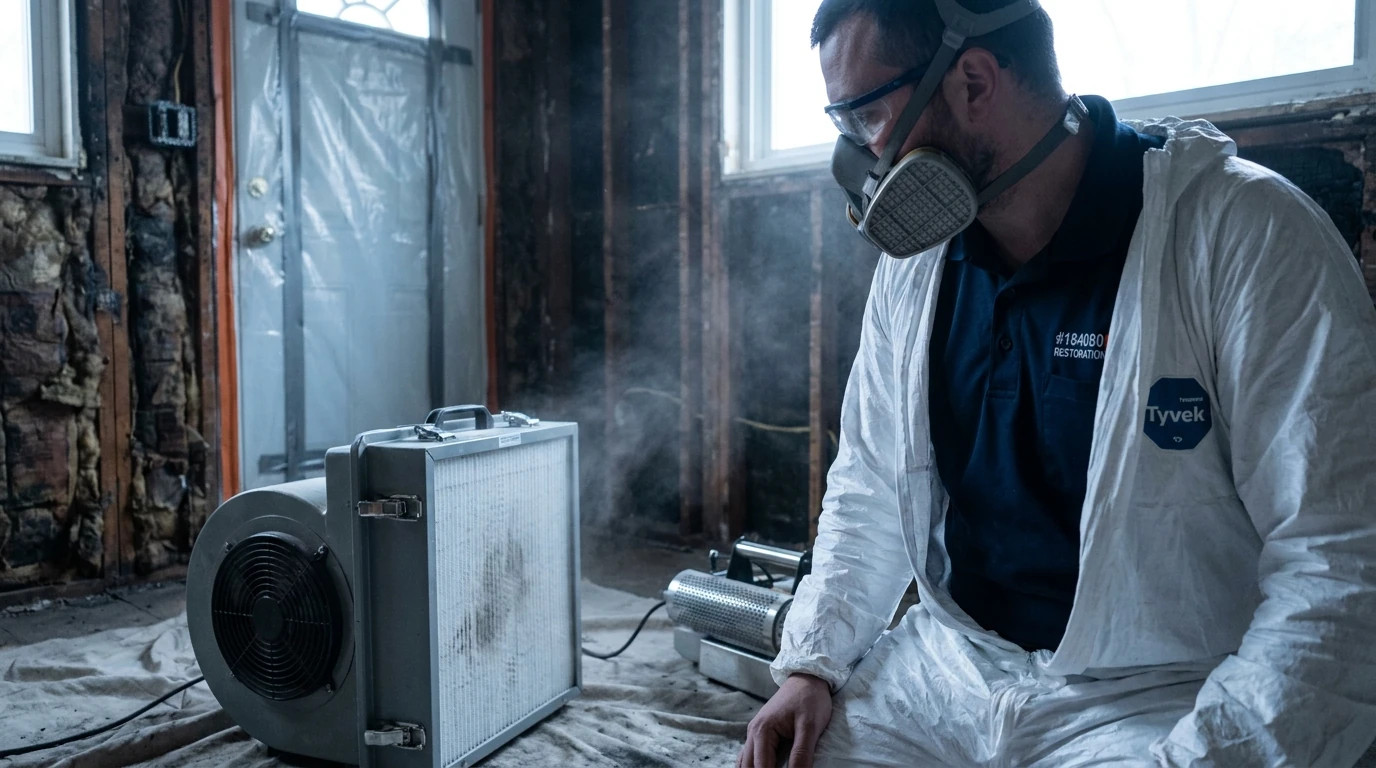
- Soot and smoke cleanup. Surfaces, HVAC systems, and contents get cleaned with techniques matched to the soot type; air scrubbers and sometimes thermal fogging or hydroxyl generators address lingering odor.
- Demolition of unsalvageable materials. Charred framing, ruined drywall, and compromised insulation come out.
- Structural rebuild. Framing, drywall, electrical, and finishes go back in to match the pre-loss condition, or to code if an upgrade is required.
For a longer walkthrough of each phase, see The Fire Damage Restoration Process, Explained.
Who should you call after a house fire in Little Falls?
Call your insurance carrier first to open the claim, then get a restoration company on-site quickly, because soot left untreated for even a few days etches into metal, grout, and finishes and becomes far more expensive to remove. Heritage Restoration LLC handles the cleanup and water mitigation side of the job and partners the rebuild into one continuous scope through its general contracting work, so you’re not managing two separate contracts and two separate timelines for one fire.
A written scope, before and after documentation, and a clear line item between “cleaning” and “rebuild” are what keep a fire claim moving. If the loss also involves standing water from suppression efforts, that gets addressed alongside the smoke and soot cleanup rather than as an afterthought. Request a fire damage assessment before deciding how much of the rebuild to tackle yourself.
Every fire is different, and a written scope from an on-site inspection is the only way to get a number specific to your home.
About Heritage Restoration LLC
Heritage Restoration LLC is an IICRC-certified company (WRT, FSRT, ASD, AMRT) serving Little Falls, Minnesota and the surrounding region, licensed under BC807677. Founded in 2023, the company handles fire and smoke damage restoration, water mitigation, mold remediation, and general contracting rebuild work, and operates on a 24/7 basis for emergency response.
Need help now? Call Heritage Restoration LLC at (320) 733-8868.