
Water Leak Detection in Little Falls
Water leak detection in Little Falls and surrounding areas. IICRC-certified, insurance billing accepted. Call (320) 733-8868.
A water bill that keeps climbing with no clear reason, a musty smell that won’t go away, a warm spot on the slab, or a ceiling stain that reappears after you’ve repainted it: these are the quiet signs of a leak that hasn’t announced itself yet. Water Leak Detection finds the source before it becomes a collapsed ceiling, a buckled floor, or a mold problem behind a wall you never expected to open. The goal isn’t guesswork. It’s locating the leak with the least amount of demolition possible.
What Water Leak Detection actually involves
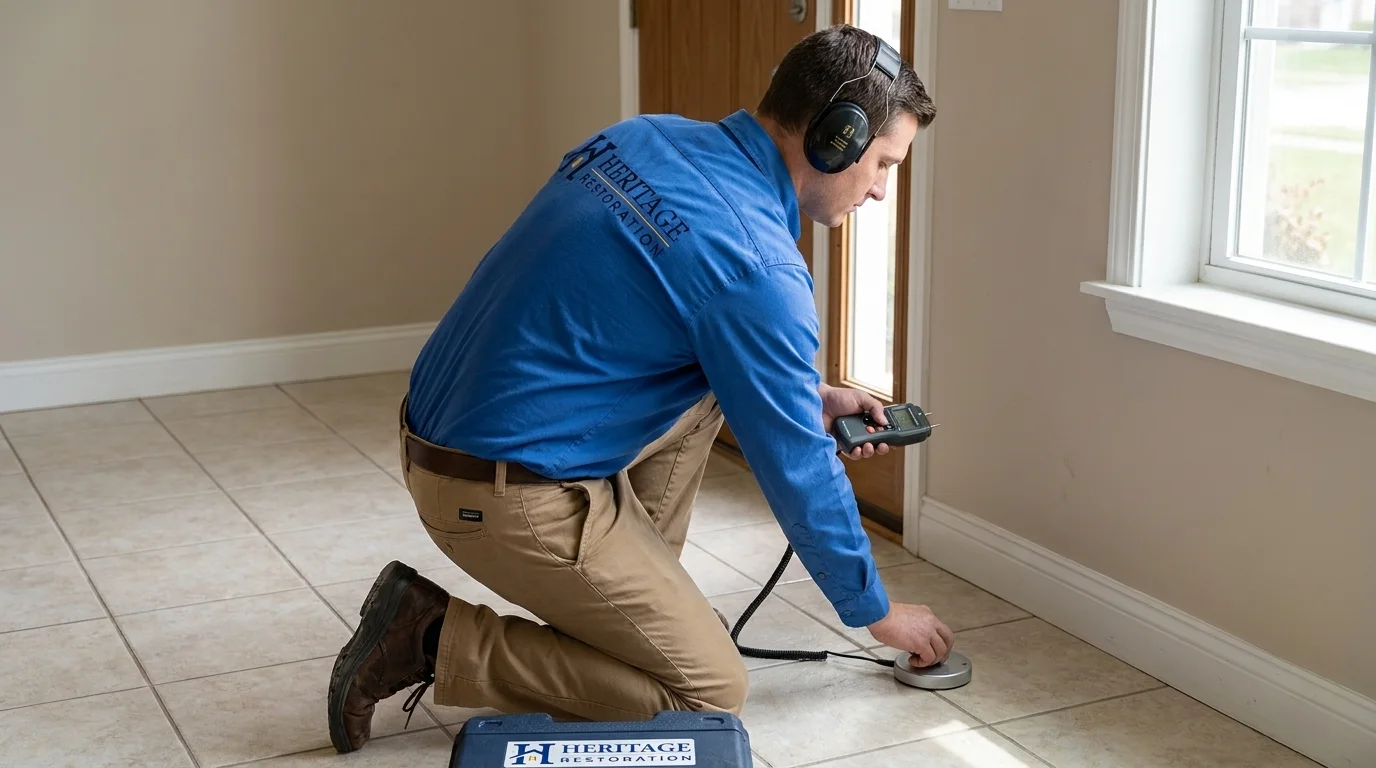
Hidden leaks rarely show up where the damage does. Water travels along joists, follows the path of least resistance down a stud bay, and pools somewhere far from the stain on your ceiling. Our technicians use acoustic listening equipment to pick up the sound of water moving under pressure, thermal imaging cameras to spot temperature differences in walls and slabs, and moisture meters to confirm what the camera suggests. For suspected slab leaks, we isolate the plumbing system and run pressure tests to narrow down which line is losing water, sometimes paired with tracer gas when the leak is deep under concrete. Most detection visits take one to three hours depending on the size of the home and how many fixtures need to be isolated and tested.
Our process
- Intake and history review. We ask about recent water bills, any sounds of running water when fixtures are off, visible staining, and when the issue was first noticed. This narrows the search before any equipment comes out.
- Non-invasive scanning. Thermal imaging and acoustic sensors scan likely areas, slab, wall cavities, under cabinetry, without cutting into anything yet.
- Pressure isolation and moisture mapping. For suspected plumbing leaks, we isolate sections of the supply line and test pressure drop. Moisture meters map out how far water has traveled from the suspected source.
- Pinpoint verification. Once we have a strong location, we confirm with minimally invasive methods, a small access point or probe, rather than opening an entire wall.
- Written report and scope. You get a documented finding with photos, moisture readings, and a clear recommendation, whether that’s a plumber for the repair or our team for water damage mitigation if materials are already affected.
What separates a good leak detection response from a bad one
The biggest mistake in leak detection is treating it like demolition instead of diagnosis. Cutting open drywall in three rooms hoping to find the source costs more in repair than the detection itself should ever justify. A good technician narrows the search with equipment first and opens material only where the data points.
Slab leaks get missed often because the warm spot on the floor isn’t always directly above the leak, water under a slab can travel several feet before it surfaces. Relying on a single method, just acoustic or just thermal, leads to false positives. Cross-checking two or three detection methods before recommending repair is what keeps a homeowner from paying to open the wrong wall.
Insurance adjusters want documentation that shows the leak was sudden and accidental rather than long-term and gradual, since that distinction often determines coverage. Dated moisture readings, thermal images, and a written timeline of when symptoms appeared all matter here. A detection report without that documentation gives the adjuster room to push back on the claim.
What does Water Leak Detection cost?
Costs vary with how accessible the suspected leak is and how much of the home needs to be scanned. A single-fixture investigation is quick; a whole-house scan with slab testing takes longer and requires more equipment setup. Every property and plumbing layout is different, which is why Heritage Restoration LLC provides a written scope of the detection work before anything begins. Homeowners insurance typically covers the cost of locating a leak when it’s tied to a covered water damage claim, though policies vary on whether detection alone is reimbursed if no damage has occurred yet.
| Scenario | Typical range |
|---|---|
| Single-fixture or single-wall leak check | $200 - $450 |
| Whole-house leak detection (thermal + acoustic) | $350 - $750 |
| Slab leak detection with pressure/tracer gas testing | $500 - $1,200 |
| Leak detection combined with moisture mapping for insurance documentation | $400 - $900 |
Seasonal & regional considerations
Central Minnesota’s freeze-thaw cycle is one of the most common causes of hidden leaks we’re asked to investigate. Pipes that stress or hairline-crack during a hard freeze often don’t fail outright until temperatures swing back up, which means the leak can go unnoticed for weeks inside a wall or under a slab. Older homes around Little Falls with original copper supply lines are also more prone to slow pinhole leaks as the plumbing ages. In summer, high humidity can cause condensation on cold water lines that mimics a leak, which is part of why multiple detection methods matter, to rule out condensation before assuming a pipe failure.
Service area
We run leak detection calls throughout Little Falls and the surrounding Morrison County communities, including homes and commercial properties on private wells and municipal water alike. Heritage Restoration LLC is licensed in Minnesota under license #BC807677.
If something in your home feels off, a water bill that doesn’t add up, a cold spot on the floor, a smell that won’t clear, it’s worth finding out why before it turns into a bigger repair. Schedule a leak detection assessment with Heritage Restoration LLC at (320) 733-8868 and get a clear answer on what’s happening and where.
Frequently Asked Questions
Does homeowners insurance cover water leak detection?
How do you find a leak without tearing open my walls?
What is a slab leak and how is it different to detect?
My water bill went up but I don't see any water. Could it be a leak?
What happens after you find the leak?
Looking for the best water leak detection company in Little Falls?
Heritage Restoration LLC provides licensed and insured water leak detection in Little Falls, MN and the surrounding area, and has served local property owners since 2023. We answer calls 24/7 — call (320) 733-8868 for immediate help.
Need Water Leak Detection now?
We respond 24/7 across Little Falls and surrounding MN cities.
Related Coverage
- Our Restoration Services
- Contact Heritage Restoration LLC
- Restoration Services in Albany
- Restoration Services in Avon
- Restoration Services in Baxter
- Restoration Services in Brainerd
- Restoration Services in Elmdale
- Restoration Services in Flensburg
- Restoration Services in Foley
- Restoration Services in Fort Ripley
- Restoration Services in Harding
- Restoration Services in Long Prairie
- Restoration Services in Pierz
- Restoration Services in Randall