
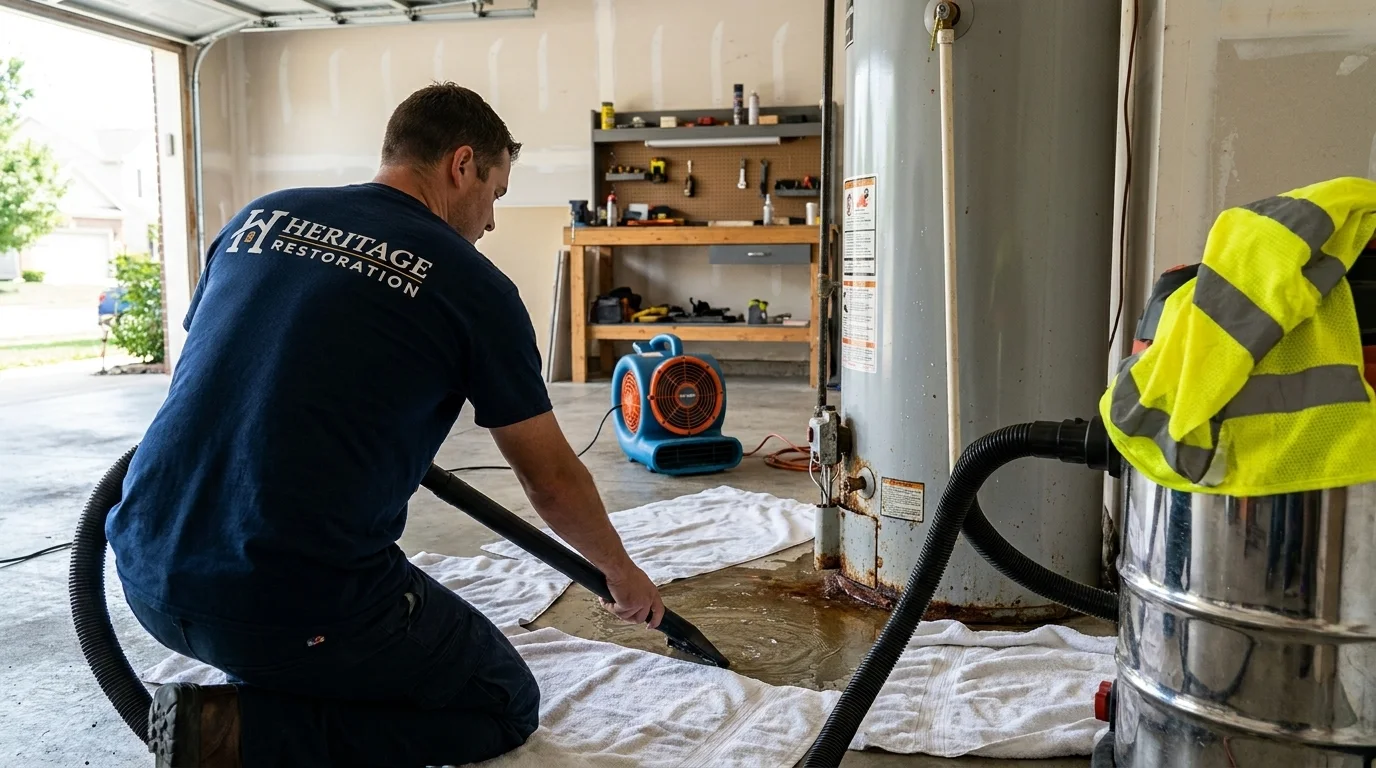
Emergency Water Heater Flood Cleanup in Little Falls
Emergency water heater flood cleanup in Little Falls and surrounding areas. IICRC-certified, insurance billing accepted. Call (320) 733-8868.
Water heater flood cleanup needed in Little Falls? Call Heritage Restoration LLC now for emergency service.
A water heater rarely gives warning before it fails completely. The tank’s glass lining cracks from the inside, a weld seam lets go, or the pressure relief valve discharges after a thermostat malfunction, and in minutes a 40 or 50 gallon tank empties onto the floor. Because most water heaters sit in a basement, utility closet, or garage, that water often finds a floor drain, a finished ceiling below, or a stack of stored boxes before anyone notices. The damage pattern is different from a slow plumbing leak: it’s a sudden volume of water hitting a confined space, and how fast it’s extracted determines whether you’re dealing with a mop and a fan or torn-out drywall and subfloor.
What water heater flood cleanup actually involves
The work starts with stopping the source, which usually means shutting the supply valve and, if the unit is gas-fired, confirming the gas line is secure before any drying equipment runs in the space. From there it’s standing water extraction with truck-mounted or portable pumps, followed by moisture mapping of the surrounding walls, flooring, and any adjacent rooms the water traveled into. Water heaters are almost always Category 1 (clean) water at the moment of failure, but that classification can shift quickly if the water sits for more than 24 to 48 hours or picks up contaminants from a dirty floor drain or sediment inside an old tank. Drying equipment, air movers, and dehumidifiers sized to the affected square footage, typically stays in place for a few days with monitoring to confirm the subfloor and wall cavities are actually dry, not just dry at the surface.
Our process
- Source control and safety check. We confirm the water supply is shut off, check for gas or electrical hazards near the unit, and assess whether the tank itself needs to come out before cleanup starts.
- Extraction. Standing water is pumped and extracted from flooring, and in basements we check whether water has traveled under walls into adjoining rooms or wall cavities.
- Moisture mapping. We use moisture meters on drywall, baseboards, and subfloor to document exactly how far the water traveled, which matters for both the drying plan and the insurance claim.
- Structured drying. Air movers and dehumidifiers are placed and monitored against the IICRC S500 standard until moisture readings in affected materials return to normal, not just until the floor looks dry.
- Final verification and reassembly. Once materials test dry, we document final readings and coordinate with you on any flooring, drywall, or cabinetry that needs to be reinstalled.
What separates a good water heater flood response from a bad one
The most common mistake is treating a water heater flood like a simple mop-up job because the water looks clean. Water that sits under vinyl flooring or inside a wall cavity for even a day can start wicking into subfloor and framing lumber, and standing water near a floor drain can carry bacteria that changes the water category. A rushed job dries the visible surfaces and leaves moisture trapped behind baseboards or under cabinet toe-kicks, which is exactly where mold shows up two or three weeks later. Insurance adjusters look for documented moisture readings at the start and end of the job, not just photos, because that’s what proves the structure was actually dried rather than assumed dry. We also check whether the water heater itself failed due to age, sediment buildup, or a defective part, since that can affect how the claim is processed.
What does water heater flood cleanup cost?
Typical costs run on the lower end for a contained utility closet leak and climb quickly if water reached finished living space or sat long enough to affect subfloor and drywall. Every loss is different, which is why Heritage Restoration LLC provides a written scope of the affected areas and drying plan before any work begins. Most homeowners insurance policies cover sudden water heater failures as a covered peril, though coverage can vary if the failure is tied to long-term neglect or the age of the unit, so it’s worth checking your specific policy.
| Scenario | Typical range |
|---|---|
| Contained leak, utility closet or garage, clean water | $500 - $1,500 |
| Water heater burst, unfinished basement floor only | $1,200 - $3,000 |
| Leak undetected for days, subfloor affected | $2,500 - $5,500 |
| Burst tank, finished basement with drywall and flooring loss | $4,000 - $9,000 |
| Multi-room spread with contents and cabinetry damage | $7,000 - $15,000+ |
Seasonal & regional considerations
In Little Falls, water heater failures tend to spike in late winter when tanks that have been quietly corroding finally give out under the extra demand of cold incoming groundwater temperatures. Older homes throughout Morrison County often have water heaters tucked into unfinished basement corners near floor joists and sump pits, so a failure can spread along low spots in the slab before anyone upstairs hears anything. If the heater sits near an exterior wall, winter cold can also slow evaporation during drying, which is one more reason moisture readings matter more than a visual check.
Service area
Heritage Restoration LLC handles water heater flood cleanup in Little Falls and throughout the surrounding communities, including Pierz, Royalton, Sartell, and the rest of Morrison County.
If your water heater has failed or is leaking right now, don’t wait on cleanup while water keeps soaking into flooring and framing. Call (320) 733-8868 to schedule your moisture assessment and get a written drying plan started before the damage spreads further.
Frequently Asked Questions
Does homeowners insurance cover water heater flood cleanup?
How do I know if my water heater leak has already caused hidden damage?
Is water from a burst water heater safe to clean up myself?
Can the water heater be repaired or replaced while cleanup is happening?
How long does drying take after a water heater flood?
Looking for the best water heater flood cleanup company in Little Falls?
Heritage Restoration LLC provides licensed and insured water heater flood cleanup in Little Falls, MN and the surrounding area, and has served local property owners since 2023. We answer calls 24/7 — call (320) 733-8868 for immediate help.
Need Water Heater Flood Cleanup now?
We respond 24/7 across Little Falls and surrounding MN cities.
Related Coverage
- Our Restoration Services
- Contact Heritage Restoration LLC
- Restoration Services in Albany
- Restoration Services in Avon
- Restoration Services in Baxter
- Restoration Services in Brainerd
- Restoration Services in Elmdale
- Restoration Services in Flensburg
- Restoration Services in Foley
- Restoration Services in Fort Ripley
- Restoration Services in Harding
- Restoration Services in Long Prairie
- Restoration Services in Pierz
- Restoration Services in Randall