Emergency Sewage Cleanup and Sanitization in Little Falls
Emergency sewage cleanup and sanitization in Little Falls and surrounding areas. IICRC-certified, insurance billing accepted. Call (320) 733-8868.
Raw sewage in your home or business? Call now for emergency service at (320) 733-8868. A sewer backup or septic overflow is a Category 3 contamination event, meaning the water carries bacteria, viruses, and pathogens that pose a real health risk the longer it sits. If you’re smelling that unmistakable sewer odor coming up through a floor drain, seeing a toilet backing up when you run the washing machine, or dealing with a septic tank that’s surfaced in the yard, the clock matters more than it does with a clean-water leak.
What Sewage Cleanup and Sanitization actually involves
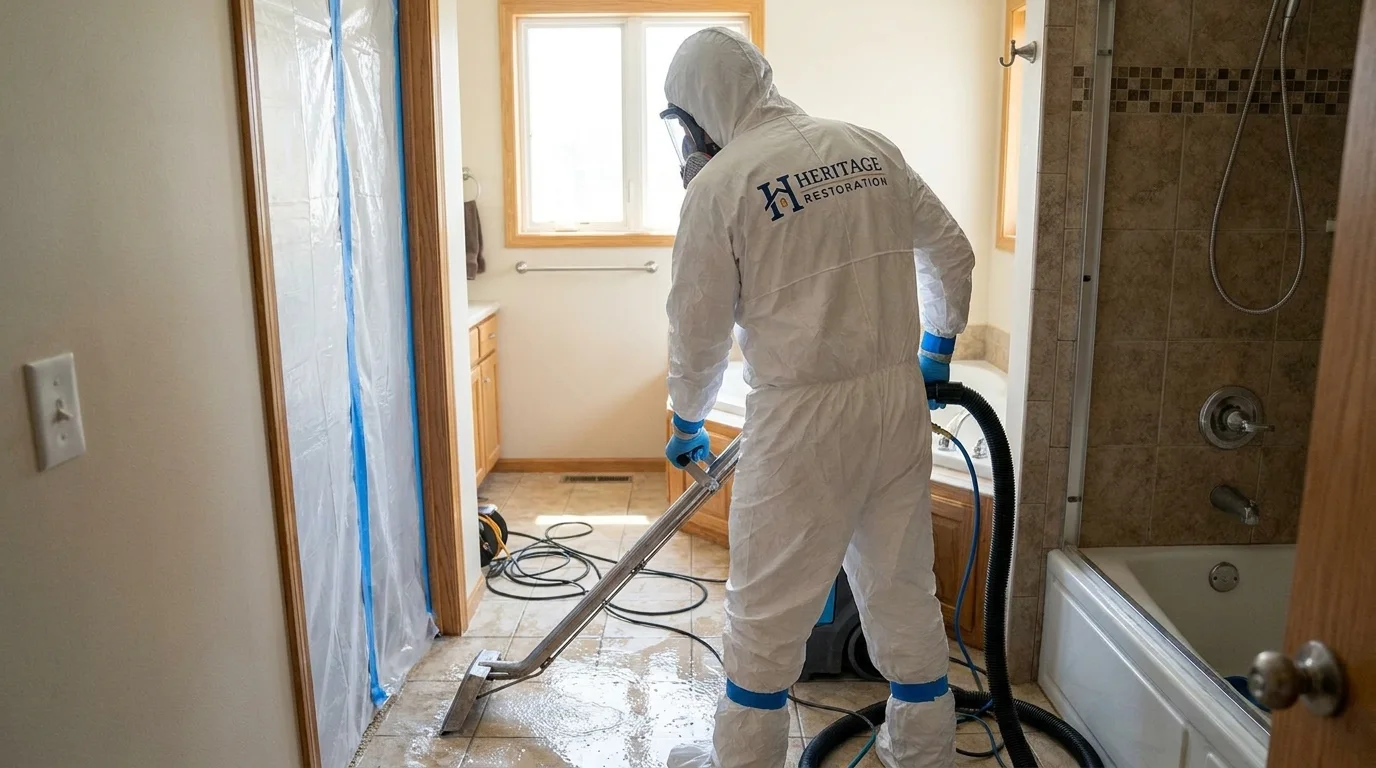
Sewage backup cleanup is not the same job as drying out a burst pipe. Because the water is contaminated, any porous material it touches, carpet, pad, drywall, insulation, baseboards, often has to come out rather than be dried in place. Crews work in full PPE (gloves, respirators, protective suits) and use truck-mounted extraction equipment to remove standing sewage before it soaks deeper into subfloors and wall cavities. From there, the work shifts to decontamination: antimicrobial and enzymatic treatments applied to every surface the water reached, followed by structural drying monitored with moisture meters over several days. A raw sewage removal job in a finished basement typically runs longer than a clean-water loss of the same size, because the containment and disposal steps add time that drying alone doesn’t require.
Our process
- Safety assessment and containment. We categorize the contamination (sewer line backup, septic overflow, or groundwater intrusion all behave differently), identify shutoff points, and set up containment barriers to stop cross-contamination into unaffected rooms.
- Extraction and removal. Standing sewage is extracted first, then contaminated porous materials, carpet, pad, baseboard, and wet drywall below the flood line, are removed and bagged for disposal per local waste handling rules.
- Cleaning and antimicrobial treatment. Hard surfaces and framing are cleaned and treated with hospital-grade antimicrobial or enzymatic solutions formulated to break down organic contamination, not just mask odor.
- Structural drying and monitoring. Air movers, dehumidifiers, and daily moisture readings bring the structure back to a dry standard consistent with IICRC S500 guidance before any rebuild begins.
- Final sanitization and clearance. A final pass of deodorization and surface testing confirms the space is ready for reconstruction or re-occupancy.
What separates a good sewage cleanup response from a bad one
The most common shortcut we see is leaving porous materials in place because they “look dry” on the surface. Carpet pad and drywall act like a sponge for sewage; if they’re not removed, odor and bacteria persist no matter how much antimicrobial spray gets used on top. Another mistake is skipping wall cavity inspection when water has wicked up behind baseboards, leaving contamination trapped where nobody checks again.
Insurance adjusters reviewing a sewage claim typically want to see documented moisture readings before and after drying, photos of removed materials, and a disposal record showing contaminated debris was handled correctly, not just thrown in a regular dumpster. A response that skips this documentation often results in disputed claims later. Technicians trained to IICRC WRT standards are taught to treat Category 3 water differently from clean water at every step, which is the distinction that matters most here.
What does Sewage Cleanup and Sanitization cost?
Costs vary with how far the contamination spread, how many porous materials need removal, and whether the backup originated from a municipal sewer line or an on-site septic system. Every loss is different, which is why Heritage Restoration LLC provides a written scope of work before any cleanup begins. Homeowners insurance often covers sudden sewer backups when a backup endorsement or rider is in place, though coverage for septic system failures varies by policy, so it’s worth checking your declarations page or asking your agent directly.
| Scenario | Typical range |
|---|---|
| Single bathroom overflow, contained | $1,500 - $3,000 |
| Basement sewer backup, finished space | $4,000 - $9,000 |
| Septic overflow affecting multiple rooms | $6,000 - $12,000 |
| Crawlspace sewage contamination | $3,500 - $7,500 |
| Large-scale backup with structural demo | $10,000 - $20,000+ |
Seasonal & regional considerations
Central Minnesota’s spring thaw is the season to watch. Snowmelt and heavy spring rain can overwhelm municipal sewer capacity and push backups into basements through floor drains, especially in older Little Falls neighborhoods with clay or cast-iron sewer laterals prone to root intrusion and cracking. Septic systems on properties outside city sewer service can also see overflow during saturated ground conditions when the drain field can’t absorb water fast enough. Knowing which system serves your property changes how we approach the cleanup and what to check for root cause.
Service area
Heritage Restoration LLC responds to sewage backup and septic overflow calls throughout Little Falls and the surrounding central Minnesota communities, including properties on both municipal sewer and private septic systems.
If sewage has backed up into your home or business, don’t wait for the smell to fade on its own, it won’t, and the contamination underneath often gets worse. Call (320) 733-8868 to begin sewage cleanup and sanitization with a crew trained to handle Category 3 water safely.
Frequently Asked Questions
Does homeowners insurance cover sewage cleanup and sanitization?
Why can't you just clean and dry the carpet instead of removing it?
How is a septic overflow cleanup different from a sewer line backup?
What happens to the wall cavities and baseboards after a sewage backup?
Is it safe to stay in the house while sewage cleanup is happening?
Looking for the best sewage cleanup and sanitization company in Little Falls?
Heritage Restoration LLC provides licensed and insured sewage cleanup and sanitization in Little Falls, MN and the surrounding area, and has served local property owners since 2023. We answer calls 24/7 — call (320) 733-8868 for immediate help.
Need Sewage Cleanup and Sanitization now?
We respond 24/7 across Little Falls and surrounding MN cities.
Related Coverage
- Our Restoration Services
- Contact Heritage Restoration LLC
- Restoration Services in Albany
- Restoration Services in Avon
- Restoration Services in Baxter
- Restoration Services in Brainerd
- Restoration Services in Elmdale
- Restoration Services in Flensburg
- Restoration Services in Foley
- Restoration Services in Fort Ripley
- Restoration Services in Harding
- Restoration Services in Long Prairie
- Restoration Services in Pierz
- Restoration Services in Randall