
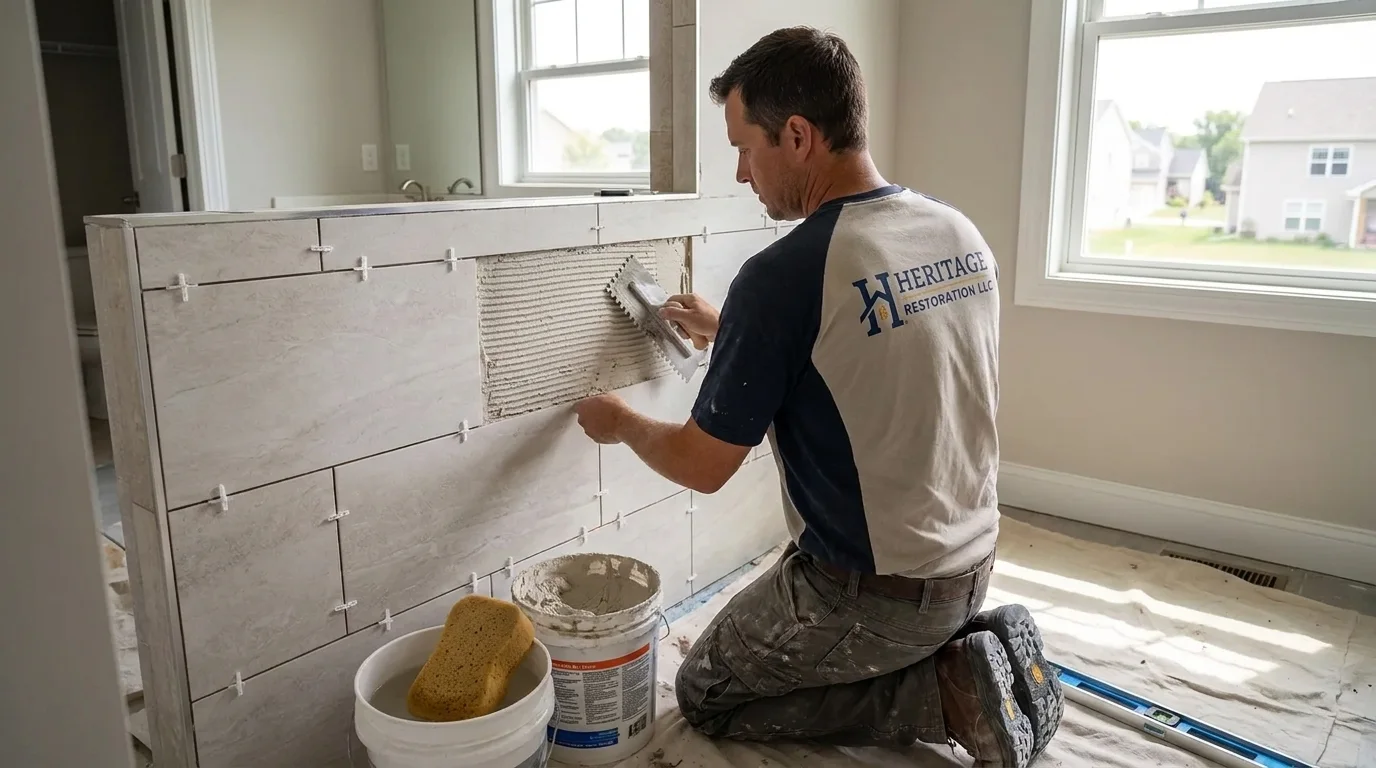
Bathroom Remodeling in Little Falls
Bathroom remodeling in Little Falls and surrounding areas. IICRC-certified, insurance billing accepted. Call (320) 733-8868.
Bathroom floor feel soft near the tub, or grout lines gone from white to gray no matter how often you clean them? Those are usually symptoms of something happening below the surface, not above it. Cast-iron drain lines fail, shower pans crack, and wax rings dry out long before the tile shows it. By the time a homeowner notices a smell, a stain on the ceiling below, or a toilet that rocks slightly when you sit down, the subfloor has often been wet for months. Bathroom remodeling at Heritage Restoration starts with figuring out what’s actually underneath the finishes, not just what color they are.
What Bathroom Remodeling actually involves
A bathroom remodel through Heritage Restoration is handled differently than a purely cosmetic update because the crew doing the work is trained to spot and correct moisture damage first. That means moisture meters and sometimes a borescope get used before any demo bid is final, because what looks like a simple tile refresh can turn into subfloor and joist repair once the old shower pan comes out. Timelines vary with scope: a fixture and surface refresh in a single bath typically runs one to two weeks, while a full gut down to the studs with subfloor replacement, new waterproofing, and fixture relocation runs four to six weeks depending on tile lead times and inspection scheduling. Homes built before 1978 get handled under EPA Lead-Safe work practices whenever paint or plaster is disturbed.
Our process
- Moisture mapping and demo scope. Before swinging a hammer, the crew checks subfloor moisture content around the tub, shower, and toilet flange, and documents what’s sound versus what needs to come out.
- Demo and structural repair. Damaged subfloor, sistered joists, and any rotted framing get replaced and allowed to reach proper moisture content before anything new goes down, so a new floor isn’t installed over a problem that was never solved.
- Waterproofing and rough-in. A sloped shower pan, membrane system, and vapor barrier go in before tile, and this is coordinated with any plumbing or electrical rough-in changes, like moving a vanity or adding a second shower head.
- Finish installation. Tile, fixtures, vanity, and trim get set, with grout and sealant chosen for the home’s water exposure, not just the showroom sample.
- Final walkthrough. The crew checks slope and drainage with water before calling the job done, and walks the homeowner through care instructions for new grout and sealant cure times.
What separates a good bathroom remodel from a bad one
The most common mistake in bathroom remodeling isn’t a bad tile choice, it’s skipping the waterproofing step to save a day or two of schedule. A shower pan installed without a proper slope, or tile set directly over green board instead of a water-resistant membrane, looks fine for a year or two and then fails the same way the original bathroom did. Insurance adjusters evaluating a remodel tied to a prior leak claim look specifically for documented subfloor moisture readings before and after repair, photos of the condition behind the tile, and confirmation that rotted framing was actually replaced rather than covered. A rushed remodel that skips permits on plumbing moves or electrical relocation also creates problems at resale, when a buyer’s inspector asks for documentation that doesn’t exist.
What does Bathroom Remodeling cost?
Costs vary widely based on whether the job is a cosmetic refresh or a remodel driven by hidden water damage that requires subfloor and framing repair. Every bathroom is scoped individually, and Heritage Restoration provides a written scope of work before any demo begins so there are no surprise change orders mid-project. Homeowners insurance typically covers the portion of a remodel tied to a covered water damage event (sudden pipe failure, for example) but generally does not cover upgrades, finish selections, or wear-related deterioration.
| Scenario | Typical range |
|---|---|
| Cosmetic refresh (fixtures, paint, new vanity) | $3,000 - $8,000 |
| Full gut remodel, no structural damage | $12,000 - $25,000 |
| Remodel with subfloor and framing repair from a leak | $15,000 - $35,000 |
| Tub-to-shower conversion with new waterproofing | $6,000 - $12,000 |
| Lead-safe demo and remodel in a pre-1978 home | $14,000 - $30,000 |
Seasonal & regional considerations
A lot of Little Falls housing stock dates to the post-war and mid-century era, which means original cast iron drain lines and galvanized supply lines are still common and more prone to pinhole leaks and corrosion than modern PEX. Hard water from private wells, common throughout this part of central Minnesota, accelerates mineral buildup around fixtures and can mask early signs of a slow leak behind tile. Winter heating season also dries interior air significantly, which can hide moisture problems longer than they’d stay hidden in a humid climate, since there’s less visible condensation to tip off a homeowner early.
Service area
Heritage Restoration handles bathroom remodeling for homeowners in Little Falls and the surrounding central Minnesota communities, including the older housing stock common throughout Morrison County.
If your bathroom floor has a soft spot, your grout won’t stay clean no matter how you scrub it, or you’re planning a remodel after a known leak, get a written scope of work before anyone starts demo. Call Heritage Restoration at (320) 733-8868 to schedule a bathroom assessment.
Frequently Asked Questions
Does homeowners insurance cover bathroom remodeling?
How do you know if subfloor needs to be replaced instead of repaired?
Do you follow lead-safe practices during demo in older homes?
What's different about remodeling a bathroom after water damage versus a straightforward update?
How long does a full bathroom remodel typically take?
Looking for the best bathroom remodeling company in Little Falls?
Heritage Restoration LLC provides licensed and insured bathroom remodeling in Little Falls, MN and the surrounding area, and has served local property owners since 2023. We answer calls 24/7 — call (320) 733-8868 for immediate help.
Need Bathroom Remodeling now?
We respond 24/7 across Little Falls and surrounding MN cities.
Related Coverage
- Our Restoration Services
- Contact Heritage Restoration LLC
- Bathroom Remodeling in Albany
- Restoration Services in Avon
- Restoration Services in Baxter
- Restoration Services in Brainerd
- Restoration Services in Elmdale
- Restoration Services in Flensburg
- Restoration Services in Foley
- Restoration Services in Fort Ripley
- Restoration Services in Harding
- Restoration Services in Long Prairie
- Restoration Services in Pierz
- Restoration Services in Randall