Industrial Restoration in Little Falls
Industrial restoration in Little Falls and surrounding areas. IICRC-certified, insurance billing accepted. Call (320) 733-8868.
Industrial water damage, fire damage, or structural saturation in a Little Falls facility? A burst sprinkler line, a failed roof drain, or a scorched conveyor section doesn’t just damage a building, it stops production. The longer equipment sits wet or soot-laden air circulates through ductwork, the more it costs in downtime, corrosion, and ruined inventory. Heritage Restoration LLC scopes industrial losses with an eye toward both the structure and the operation running inside it, so you know what has to stop and what can keep moving.
What Industrial Restoration actually involves
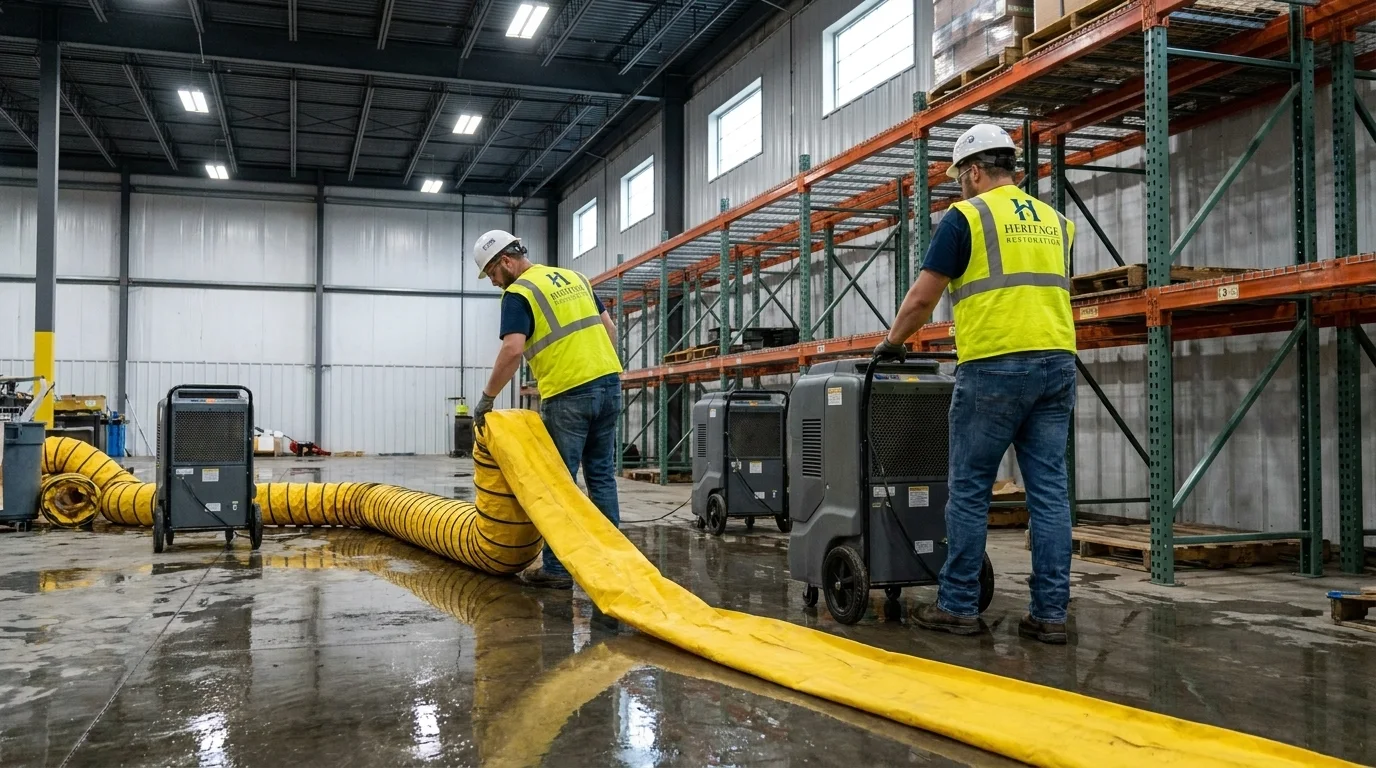
Industrial restoration covers the same core disciplines as residential work, water extraction, structural drying, soot and odor removal, but at a different scale and under different constraints. A warehouse with a saturated slab under racking systems behaves differently than a house with wet carpet. A manufacturing floor with electrical panels, hydraulic lines, or raw material storage adds exposure categories a typical drying plan doesn’t account for. Equipment often needs to be moved, shielded, or shut down before any extraction starts, and large open floor plans mean psychrometric readings have to be taken in multiple zones rather than one room. Depending on the loss, this work pulls from our IICRC WRT, ASD, and FSRT training, and timelines run longer than a residential job simply because of square footage and the number of affected systems.
Our process
- Facility assessment and production impact triage. We walk the affected area with facility management to identify what’s structurally damaged, what equipment is at risk, and which zones can stay operational during the work.
- Containment and equipment protection. Before extraction or soot removal begins, we isolate the work area with poly barriers and negative air where needed, and protect machinery, inventory, and electrical systems from moisture or airborne residue.
- Extraction, drying, or soot removal. Depending on the loss type, this means high-capacity extraction and structural drying monitored with moisture meters, or soot characterization and HEPA cleaning for fire-related losses.
- Equipment and materials decontamination. Machinery, shelving, and stored product are cleaned or assessed separately from the building structure, since corrosion and residue on equipment often outlast visible water or smoke damage.
- Documentation for business interruption and insurance review. We photograph and log moisture readings, affected square footage, and damaged equipment so your claim reflects both property loss and downtime.
What separates a good industrial restoration response from a bad one
The most common mistake on industrial losses is treating the building like a house, drying the slab and walls while ignoring what’s sitting on top of it. Pallet racking, electrical conduit, and HVAC returns can trap moisture or soot long after the floor reads dry. Adjusters reviewing industrial claims look for documented readings across the full affected area, not a single hallway reading applied to an entire warehouse, and they look for evidence that equipment and inventory were inspected separately from the structure. A response that skips equipment-level documentation often results in secondary claims for corrosion or contamination that surface weeks later, which is harder to tie back to the original loss.
What does Industrial Restoration cost?
Industrial losses vary more than almost any other restoration category because square footage, equipment value, and the type of loss all shift the scope. Every facility is different, and Heritage Restoration LLC provides a written scope of work before any work begins so there are no surprises once drying equipment or cleanup crews are on site. Most commercial property policies cover sudden water or fire damage to the structure, with business interruption coverage handled as a separate line item that your broker can confirm.
| Scenario | Typical range |
|---|---|
| Localized water extraction, small storage area | $2,000 - $6,000 |
| Warehouse floor drying, 5,000+ sq ft | $8,000 - $25,000 |
| Fire and soot cleanup, single production zone | $10,000 - $35,000 |
| Equipment decontamination (per unit/line) | $1,500 - $8,000 |
| Full facility structural drying and reconstruction scope | $40,000+ |
Seasonal & regional considerations
Central Minnesota winters bring frozen and burst pipes to unheated or partially heated industrial spaces, often in sections of a facility that aren’t checked daily. Spring thaw adds roof and foundation water intrusion risk, especially in older brick and steel-frame buildings common around Little Falls industrial corridors. Humidity swings between seasons also matter for facilities storing paper, textiles, or food product, since those materials pick up moisture faster than concrete or steel and can mold within days if drying is delayed.
Service area
Heritage Restoration LLC serves industrial and manufacturing facilities in Little Falls and the surrounding Morrison County area, including nearby communities along the Mississippi River corridor where older mill and plant buildings are common.
If water, fire, or structural damage is affecting your facility, call (320) 733-8868 to get a site assessment and written scope started before the damage spreads further into your operation.
Frequently Asked Questions
Does homeowners or commercial insurance cover industrial restoration?
Does production have to stop during restoration work?
How do you handle restoration around machinery and equipment?
What is business interruption documentation and why does it matter for a claim?
How is drying a warehouse or plant floor different from drying a house?
Looking for the best industrial restoration company in Little Falls?
Heritage Restoration LLC provides licensed and insured industrial restoration in Little Falls, MN and the surrounding area, and has served local property owners since 2023. We answer calls 24/7 — call (320) 733-8868 for immediate help.
Need Industrial Restoration now?
We respond 24/7 across Little Falls and surrounding MN cities.
Related Coverage
- Our Restoration Services
- Contact Heritage Restoration LLC
- Restoration Services in Albany
- Restoration Services in Avon
- Restoration Services in Baxter
- Restoration Services in Brainerd
- Restoration Services in Elmdale
- Restoration Services in Flensburg
- Restoration Services in Foley
- Restoration Services in Fort Ripley
- Restoration Services in Harding
- Restoration Services in Long Prairie
- Restoration Services in Pierz
- Restoration Services in Randall