
Emergency Flood Damage Restoration in Little Falls
Emergency flood damage restoration in Little Falls and surrounding areas. IICRC-certified, insurance billing accepted. Call (320) 733-8868.
Flood damage emergency in Little Falls? Call now for emergency service at (320) 733-8868. When river water, snowmelt, or a surcharged storm drain pushes into a basement or crawlspace, the water carries silt, bacteria, and runoff contaminants that behave very differently from a clean supply-line leak. The clock matters, but so does knowing what that water actually is before anyone starts tearing out drywall or running fans.
What Flood Damage Restoration actually involves
Flood damage restoration deals with water that originated outside the home, typically from river overflow, overland surface water, or a sewer system overwhelmed by storm volume. The IICRC classifies this as Category 3 (“black”) water, meaning it’s presumed contaminated regardless of how clear it looks. That classification changes almost everything about the job: which materials can be dried in place, which have to be cut out and discarded, and what PPE and containment the crew sets up before extraction even starts.
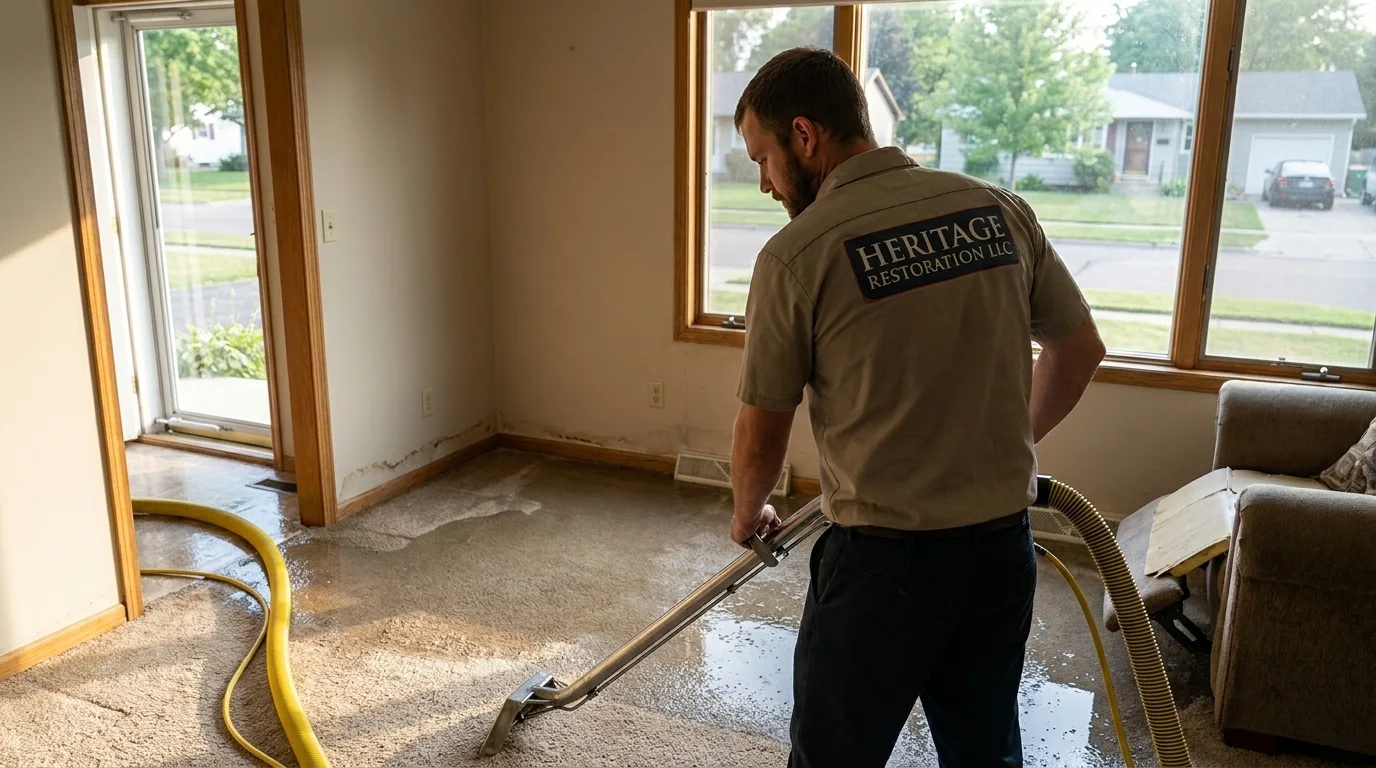
The work usually involves pumping or extracting standing water, removing silt and debris left behind as the water recedes, discarding porous materials that absorbed contaminated water, and then drying the remaining structure with the same engineered airflow and monitoring used on any major water loss. Along the Mississippi River corridor through Morrison County, that often means fieldstone or block foundations, older tile drainage systems, and finished basements where water has wicked up framing and insulation well above the visible waterline.
Our process
- Contamination and safety assessment. We identify the water category, check for electrical and structural hazards, and determine what PPE and containment the space needs before anyone enters.
- Extraction and debris removal. Pumps and extraction units remove standing water while crews clear silt, sediment, and flood debris that settles into flooring and wall cavities.
- Material removal per contamination protocol. Carpet, pad, drywall, and insulation that contacted floodwater are documented and removed rather than dried, following IICRC S500 category 3 guidance.
- Antimicrobial treatment and structural drying. Remaining framing, subfloor, and masonry are treated and dried with monitored airflow and dehumidification, with moisture readings logged until materials reach dry standard.
- Documentation and reconstruction handoff. Photos, moisture logs, and material disposal records go into the claim file, and the space is prepped for rebuild where materials were removed.
What separates a good flood response from a bad one
The most common mistake is treating floodwater like a clean-water leak: drying out carpet pad or drywall that should have been discarded, or skipping the antimicrobial step because the water “looked clean” after it receded. That shortcut can leave bacteria and odor-causing residue trapped in porous materials long after the space feels dry to the touch.
A careful crew documents the waterline on every wall, photographs materials before removal, and keeps moisture logs through the full drying cycle, not just the first and last day. Adjusters reviewing a flood claim typically want to see that contaminated materials were removed (not just dried), that drying equipment ran long enough to reach standard on structural moisture content, and that the scope matches what the policy or NFIP claim actually covers.
What does Flood Damage Restoration cost?
Costs vary with how much water came in, how long it sat, and how much of the structure was affected before the crew arrived. The ranges below reflect typical industry figures for residential flood cleanup, not a quote. Heritage Restoration LLC provides a written scope of work before any work begins, and the final cost depends on what’s found once materials are opened up.
| Scenario | Typical range |
|---|---|
| Small basement area, few inches of water | $3,000 - $7,000 |
| Whole finished basement, flood-contaminated water | $8,000 - $20,000 |
| Crawlspace flooding with insulation replacement | $2,500 - $6,000 |
| Main floor flood with flooring and drywall removal | $10,000 - $25,000 |
| Large residential flood requiring structural drying and rebuild | $20,000 and up |
Most standard homeowners policies exclude damage from rising floodwater, which is typically covered under a separate flood insurance policy or an NFIP policy rather than a standard HO-3 form. Heritage Restoration LLC works with all insurance carriers and flood policy administrators and handles the documentation either way.
Seasonal & regional considerations
Little Falls sits on the Mississippi River, and spring is the season that matters most here: snowmelt combined with spring rain raises river levels and pushes groundwater up against older foundations faster than sump systems can keep pace. Ice jams further upstream can also cause sudden, short-term flooding outside the typical spring runoff window. Homes with fieldstone or block basement walls common in the area’s older housing stock tend to absorb and hold moisture longer than poured concrete, which stretches out the drying phase even after visible water is gone.
Service area
Heritage Restoration LLC responds to flood damage throughout Little Falls and surrounding Morrison County communities along the Mississippi and Swan River corridors. Call (320) 733-8868 to get a crew scheduled and a scope started.
If water has come into your home from outside, start documenting the waterline and affected rooms with your phone before cleanup begins, then call to schedule your flood damage assessment so the drying and removal work starts on the right footing.
Frequently Asked Questions
Does homeowners insurance cover flood damage restoration?
Is floodwater always treated as contaminated?
What gets removed after a flood versus dried and saved?
How long does a typical flood cleanup take?
What should I do while waiting for a flood restoration crew to arrive?
Looking for the best flood damage restoration company in Little Falls?
Heritage Restoration LLC provides licensed and insured flood damage restoration in Little Falls, MN and the surrounding area, and has served local property owners since 2023. We answer calls 24/7 — call (320) 733-8868 for immediate help.
Need Flood Damage Restoration now?
We respond 24/7 across Little Falls and surrounding MN cities.
Related Coverage
- Our Restoration Services
- Contact Heritage Restoration LLC
- Restoration Services in Albany
- Restoration Services in Avon
- Restoration Services in Baxter
- Restoration Services in Brainerd
- Restoration Services in Elmdale
- Restoration Services in Flensburg
- Restoration Services in Foley
- Restoration Services in Fort Ripley
- Restoration Services in Harding
- Restoration Services in Long Prairie
- Restoration Services in Pierz
- Restoration Services in Randall