TL;DR: Water damage restoration follows five phases: inspection and moisture mapping, water extraction, structural drying, cleaning and sanitizing, and repair or rebuild. A licensed crew uses moisture meters, truck-mounted extractors, air movers, and LGR dehumidifiers to dry a structure to pre-loss moisture levels, typically within 3 to 5 days for a contained loss. Skipping or rushing any phase raises the risk of hidden mold growth and structural damage that costs far more to fix later.
If you are standing in a wet basement in St. Cloud right now, or you just filed a claim after a pipe burst in your Cathedral District home, you want to know exactly what the restoration crew is going to do, and why. This guide walks through every phase of the process, the equipment involved, and what you should expect at each step.
What Does Water Damage Restoration Actually Include?
Water damage restoration includes five distinct phases: a moisture inspection, mechanical water extraction, structural drying, antimicrobial cleaning and sanitizing, and final repairs or rebuild. Each phase has a defined goal and measurable endpoint, it is not simply “dry it out and patch it up.”
The governing standard is the IICRC S500, the industry’s technical reference for water damage restoration. Certified technicians follow its protocols for classifying the loss, selecting equipment, and confirming dry standards before closing out a job. When you hire a crew holding IICRC WRT (Water Restoration Technician) and ASD (Applied Structural Drying) certifications, you know they are trained to that standard, not just running fans and hoping for the best.
Step 1: Inspection and Moisture Mapping
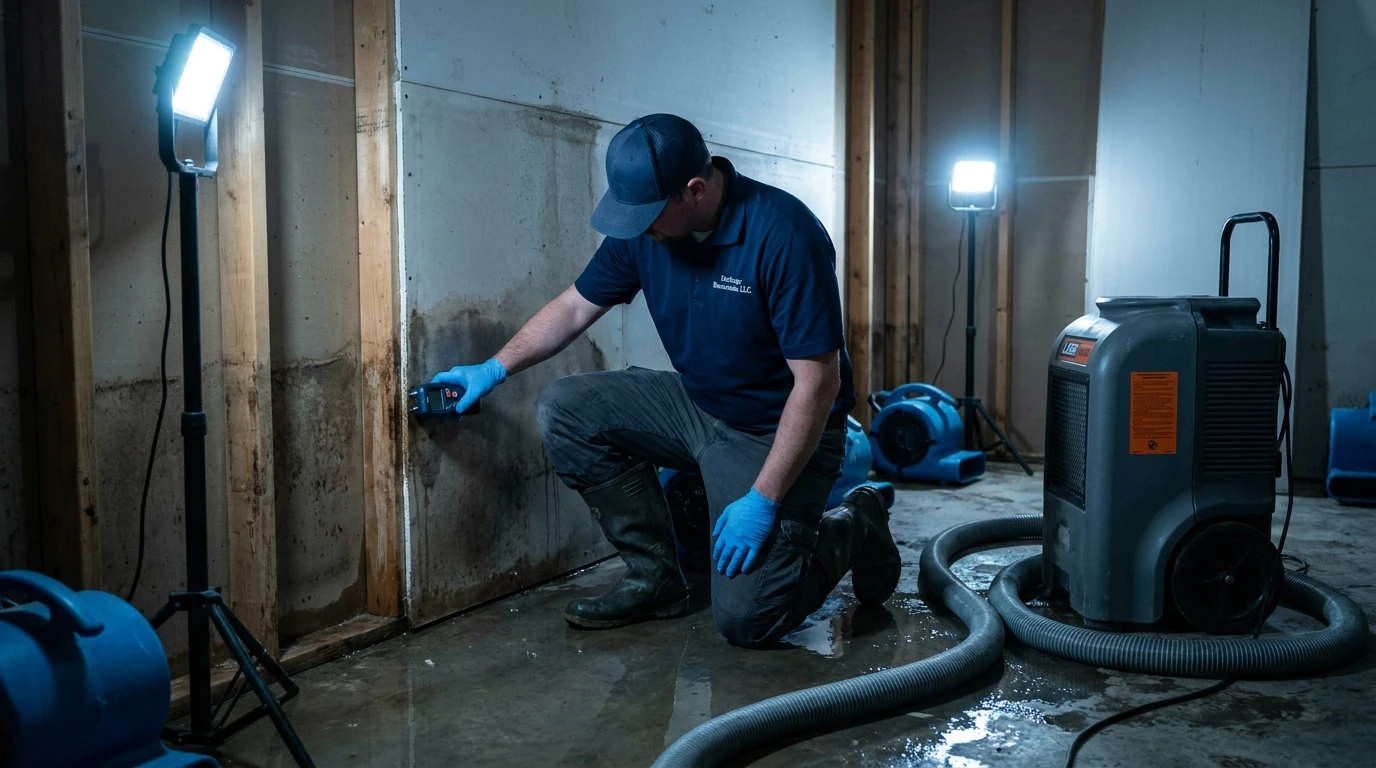
The first thing a restoration crew does is assess the full extent of the damage, including moisture that has already migrated into walls, subfloors, and cavities that look dry on the surface. This phase determines the scope of everything that follows.
Technicians use several tools here:
- Penetrating moisture meters measure moisture content inside drywall and wood framing. Readings above 16% in wood or 1% in drywall typically indicate elevated moisture that needs active drying.
- Non-penetrating (pin-less) meters scan large surface areas quickly to find the boundaries of the wet zone.
- Thermal imaging cameras detect temperature differentials behind walls and under floors, wet materials hold temperature differently than dry ones, making hidden moisture visible without cutting into surfaces.
- Hygrometers measure ambient relative humidity in each room, which drives drying equipment placement.
The crew also classifies the water source. Category 1 (clean water from a supply line) carries low contamination risk. Category 2 (gray water from appliances or overflows) carries moderate risk. Category 3 (black water from sewage or floodwater) is considered grossly contaminated and requires full PPE and antimicrobial treatment throughout. The category determines how aggressively materials need to be removed versus dried in place.
At the end of this step, the crew has a moisture map: a room-by-room picture of where the water went and how far it traveled. That map drives the drying plan.
Step 2: Water Extraction
Extraction removes the bulk of standing and absorbed water before drying equipment is deployed. The faster this happens, the less water migrates into building materials and the shorter the overall drying time.
For standing water, crews use truck-mounted extractors, high-powered vacuum units mounted in the service van that pull water out of flooring and saturated materials at rates far beyond a shop vac. For carpet and pad, weighted extraction tools press down to pull water from the lower layers. For hard flooring with water beneath, technicians may use floor mat extraction systems that create suction directly under the surface without tearing it up.
If Category 2 or 3 water is involved, porous materials like carpet pad and heavily saturated drywall are typically removed rather than dried in place. Attempting to dry grossly contaminated materials creates a mold and odor problem that costs more to remediate later. Your crew should explain what is being removed and why before they start cutting.
Extraction is also when the crew identifies whether any structural materials need emergency demolition to expose wet cavities, a process called “flood cuts” on drywall. A flood cut is typically made 12 to 18 inches above the visible waterline to ensure the full wet zone is exposed for drying.
Step 3: Structural Drying
Structural drying is the longest phase and the one most homeowners underestimate. Removing standing water is fast. Drying the moisture that has absorbed into wood framing, concrete, and wall cavities takes days of sustained airflow and dehumidification.
The two primary tools are air movers and LGR dehumidifiers, and they work together as a system:
- Air movers (also called axial fans or snail fans) create high-velocity airflow across wet surfaces. This accelerates evaporation by constantly replacing the humid boundary layer of air sitting against the wet material with drier air.
- LGR dehumidifiers (Low Grain Refrigerant dehumidifiers) pull that moisture-laden air out of the room and condense it into liquid, which drains away. LGR units are significantly more efficient than conventional dehumidifiers at lower grain humidity levels, exactly the conditions during the later stages of drying when the remaining moisture is harder to extract.
Equipment placement follows a formula based on the square footage, the class of water damage (Class 1 through 4, based on how much material is affected and how deeply), and the ambient conditions. A properly sized drying system for a 400-square-foot basement loss might include 4 to 6 air movers and 1 to 2 LGR dehumidifiers running continuously.
Technicians return daily to take moisture readings and log them. Drying is not complete until all affected materials reach their dry standard, typically within 2% of the equilibrium moisture content for that material type. For most residential losses in St. Cloud, structural drying takes 3 to 5 days. For a deeper look at what affects that timeline, see our post on how long water damage restoration actually takes.
One thing worth knowing: Minnesota’s climate matters here. St. Cloud averages relatively low outdoor humidity in September, which helps, dry outside air can be brought in to assist drying when conditions allow. In summer months with high outdoor dew points, the dehumidifiers carry more of the load.
Step 4: Cleaning and Sanitizing
Once moisture readings confirm the structure has reached dry standard, the cleaning phase begins. This step addresses microbial contamination, odor, and any residual debris from the water event.
For Category 1 losses with clean water, cleaning is relatively straightforward: antimicrobial solution applied to affected surfaces, HEPA vacuuming of any debris, and deodorization if needed. For Category 2 or 3 losses, the process is more involved: affected surfaces are treated with EPA-registered antimicrobials, contents that were contacted by contaminated water are either professionally cleaned or documented for disposal, and the crew may run air scrubbers with HEPA filtration to capture airborne particulates.
The EPA’s guidance on mold and water damage cleanup notes that mold can begin growing within 24 to 48 hours on wet organic materials. Proper cleaning and sanitizing after drying is what prevents a water damage claim from becoming a mold remediation project. If mold is already present when the crew arrives, that requires a separate remediation scope.
This is also the phase where your crew should provide documentation: moisture logs, equipment placement records, and photos of the cleaned and dried space. That documentation matters for your insurance claim and for confirming the job was done to standard.
Step 5: Repair and Rebuild
The final phase returns the property to its pre-loss condition. Depending on what was removed or damaged, this can range from patching and painting a single section of drywall to replacing flooring, cabinetry, or structural framing.
For St. Cloud homeowners navigating an insurance claim, the repair scope is typically documented in a line-item estimate (Xactimate is the industry-standard estimating platform most insurers use). A restoration contractor with general contracting capabilities can handle both the mitigation and the rebuild under one scope, which simplifies coordination and reduces the gap between the insurance estimate and the actual work.
If your loss involved a burst pipe or appliance failure, the source of water should be repaired before the rebuild begins, a step that sometimes involves a separate plumber. Make sure that repair is documented for your insurer as well.
Do You Need a Licensed Restoration Company for This?
In Minnesota, water damage restoration work that includes structural repairs requires a licensed contractor. The mitigation side (extraction, drying, cleaning) does not carry the same licensing requirement, but hiring a crew with IICRC certification and a general contractor license (like BC807677) means one company can take the job from wet floors to finished walls without handing off to a second contractor mid-project.
For St. Cloud and the surrounding area, Heritage Restoration LLC holds IICRC certifications in WRT, ASD, and FSRT, is EPA Lead-Safe certified, and carries contractor license BC807677. You can reach their team at (320) 733-8868 or request a moisture assessment through their St. Cloud water damage restoration page.
If you are still in the first hours after a loss, the burst pipe checklist covers what to do before the crew arrives. For insurance questions, the homeowners insurance guide explains what most policies cover and what they exclude.
About Heritage Restoration LLC
Heritage Restoration LLC is an IICRC-certified firm serving St. Cloud, Little Falls, and surrounding central Minnesota communities since 2023 (license BC807677). The company holds IICRC certifications in Water Restoration (WRT), Applied Structural Drying (ASD), Fire and Smoke Restoration (FSRT), and Applied Microbial Remediation (AMRT), and is EPA Lead-Safe certified. Services include water damage restoration, emergency water cleanup, storm damage restoration, and general contracting.
Video Transcript
Water damage in your St. Cloud home is stressful. Knowing exactly what happens next makes it manageable. Here is the full restoration process, step by step. Every job starts with a full inspection. Technicians use moisture meters and thermal cameras to find hidden water inside walls and under floors before it causes bigger problems. A thermal camera reveals moisture you cannot see. Cold spots behind walls show exactly where water migrated, so nothing gets missed during drying. Next comes extraction. A truck-mounted unit pulls hundreds of gallons from carpet, flooring, and saturated materials far faster than any shop vacuum ever could. Heavily contaminated or soaked materials like carpet pad get removed entirely. Trying to dry contaminated materials in place creates mold problems that cost far more to fix later. Structural drying is the longest phase. Air movers push high-velocity airflow across wet surfaces while industrial dehumidifiers pull that moisture out of the air continuously. Technicians check moisture readings every single day and log the numbers. Drying is only complete when readings reach pre-loss levels, usually within three to five days. After drying, the space is cleaned and treated with antimicrobial solution. This step eliminates any bacteria or mold spores before repairs begin. Do not wait on water damage. Every hour increases the risk of mold. Call Heritage Restoration LLC at 320-733-8868 for a free estimate today.