
TL;DR: In Minnesota, water damage restoration typically runs $500 for a small, clean-water leak up to $15,000 or more for a sewage backup or whole-basement flood. Most jobs fall between $2,500 and $8,000. The biggest cost drivers are water category (clean, gray, or black water), how much square footage is affected, and how fast the water gets extracted.
If you’re standing in a wet basement after the spring thaw, or you just shut off the supply line to a burst pipe in a Little Falls rental, the number you want first is a price range, not a sales pitch. Minnesota’s freeze-thaw cycles and heavy spring snowmelt make water damage one of the most common insurance claims in the state, and the cost swings more than most homeowners expect based on how long the water sat before anyone called for help.
How Much Does Water Damage Restoration Cost in Minnesota?
Most Minnesota homeowners pay between $2,500 and $8,000 for water damage restoration, though small leaks can run under $1,000 and large losses with structural drying or sewage involved can exceed $15,000. Price depends almost entirely on three things: how contaminated the water is, how many square feet got wet, and how many hours passed before extraction started.
Here’s a realistic breakdown by scenario:
| Scenario | Typical Cost Range |
|---|---|
| Small bathroom or appliance leak, clean water, under 150 sq ft | $500 - $1,500 |
| Category 2 (gray water) kitchen or laundry leak | $2,500 - $6,000 |
| Basement flooding from sump pump failure, 500-1,000 sq ft | $3,000 - $8,000 |
| Burst pipe in a finished basement, drywall and flooring replacement | $4,500 - $12,000 |
| Category 3 (black water) sewage backup | $7,000 - $15,000+ |
| Whole-home flooding from spring thaw or ice dam damage | $10,000 - $45,000+ |
These are industry-typical ranges for central Minnesota, not a quote. Every loss is different, and Heritage Restoration LLC provides a written scope of work before any demolition or drying equipment goes in, so you know what you’re paying for before you sign anything.
What Factors Affect the Cost of Water Damage Repair in MN?
Four things move the price more than anything else: water category, response time, square footage, and what materials got wet. A clean-water leak caught within hours costs a fraction of a black-water loss that sat for two days.
Water category is the first variable. The IICRC S500 standard classifies water into three categories: Category 1 (clean water, like a supply line break), Category 2 (gray water, like a washing machine overflow), and Category 3 (black water, like a sewage backup or floodwater that’s been sitting). Category 3 water requires more aggressive demolition, antimicrobial treatment, and disposal of porous materials that can’t be saved, which drives labor and material costs up significantly.
Response time matters just as much. Drywall and subfloor start absorbing moisture within minutes, and mold growth can begin in as little as 24 to 48 hours in a humid Minnesota basement. A leak caught the same day usually means drying in place. A leak discovered after a weekend away often means tear-out of drywall, insulation, and flooring that’s already saturated.
Square footage and materials finish the equation. A single bathroom with tile flooring dries faster and cheaper than an open-concept basement with carpet, drywall, and finished ceiling. Hardwood floors, in particular, add cost because they often need specialized drying mats rather than standard air movers.
Minnesota’s climate adds a wrinkle other states don’t deal with as often: frozen pipe bursts in January and February, and sump pump failures during the March-April snowmelt, both tend to produce larger losses because homeowners are often away or asleep when the failure starts.
Will Homeowners Insurance Cover Water Damage Restoration Costs?
Most standard homeowners policies cover sudden, accidental water damage, like a burst pipe or a failed water heater, but they typically exclude gradual leaks and most flood damage from surface water. The distinction between “sudden and accidental” and “gradual” is where most coverage disputes start.
A pipe that freezes and splits overnight is almost always covered. A slow leak behind a wall that’s been seeping for months usually isn’t, because insurers treat that as a maintenance failure rather than a sudden event. Flood damage from rising rivers or surface water, which matters for Minnesota properties near the Mississippi River corridor through Little Falls, generally requires a separate FEMA National Flood Insurance Program policy, since standard homeowners insurance excludes it.
Documentation is what protects a claim. Photos of standing water before extraction, a written moisture log, and an itemized scope of work all matter when an adjuster reviews the file. Heritage Restoration LLC documents moisture readings and drying progress throughout the job specifically so that paperwork holds up during the claims process. Our blog post on whether homeowners insurance covers water damage breaks down coverage patterns in more detail if you’re still waiting on an adjuster call.
What Happens During the Water Damage Restoration Process?
A typical water damage job moves through four phases: inspection, extraction, drying, and repair. Each phase has its own cost component, which is why a detailed scope matters more than a single lump-sum number.
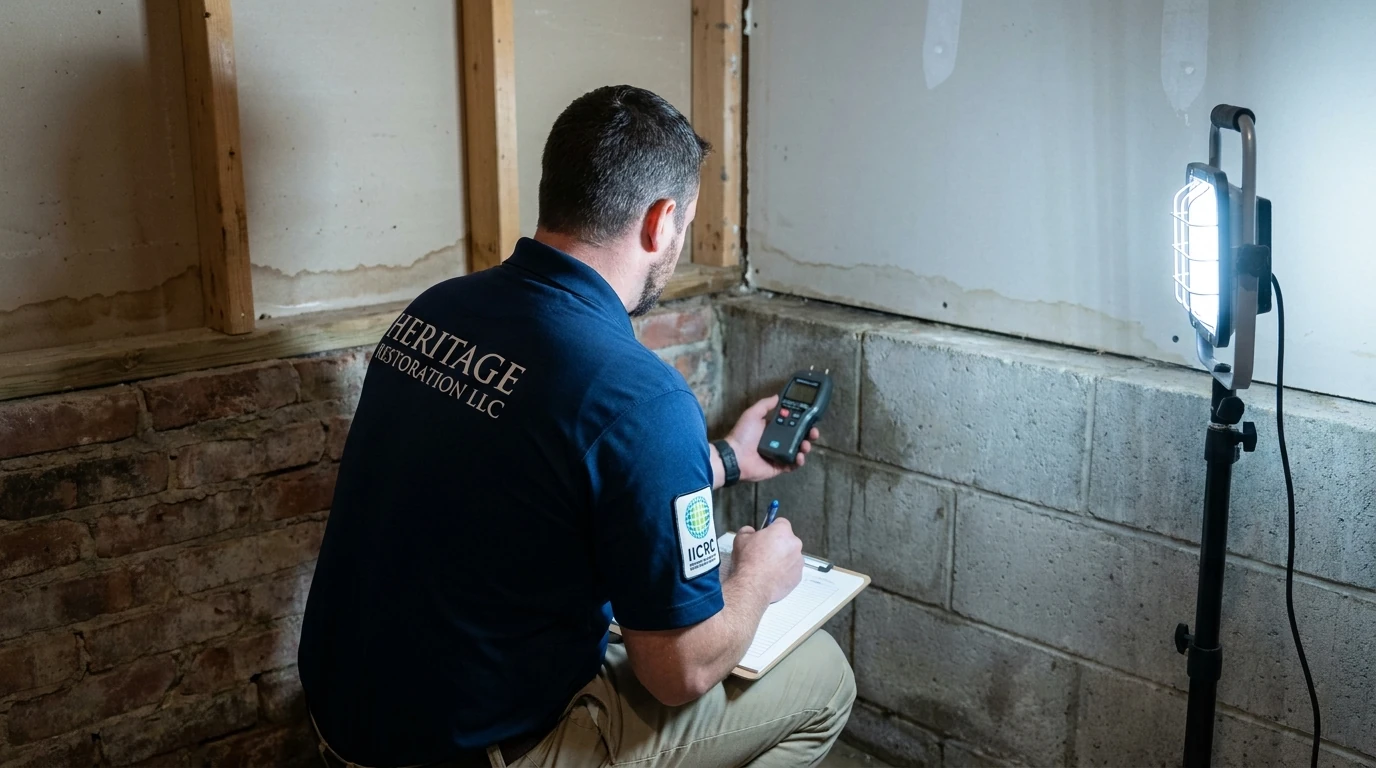
- Inspection and moisture mapping. A technician uses a moisture meter and thermal imaging to identify how far the water traveled, including behind walls and under flooring that looks dry on the surface.
- Water extraction. Standing water gets removed with truck-mounted or portable extraction equipment, usually within the first few hours of arrival.
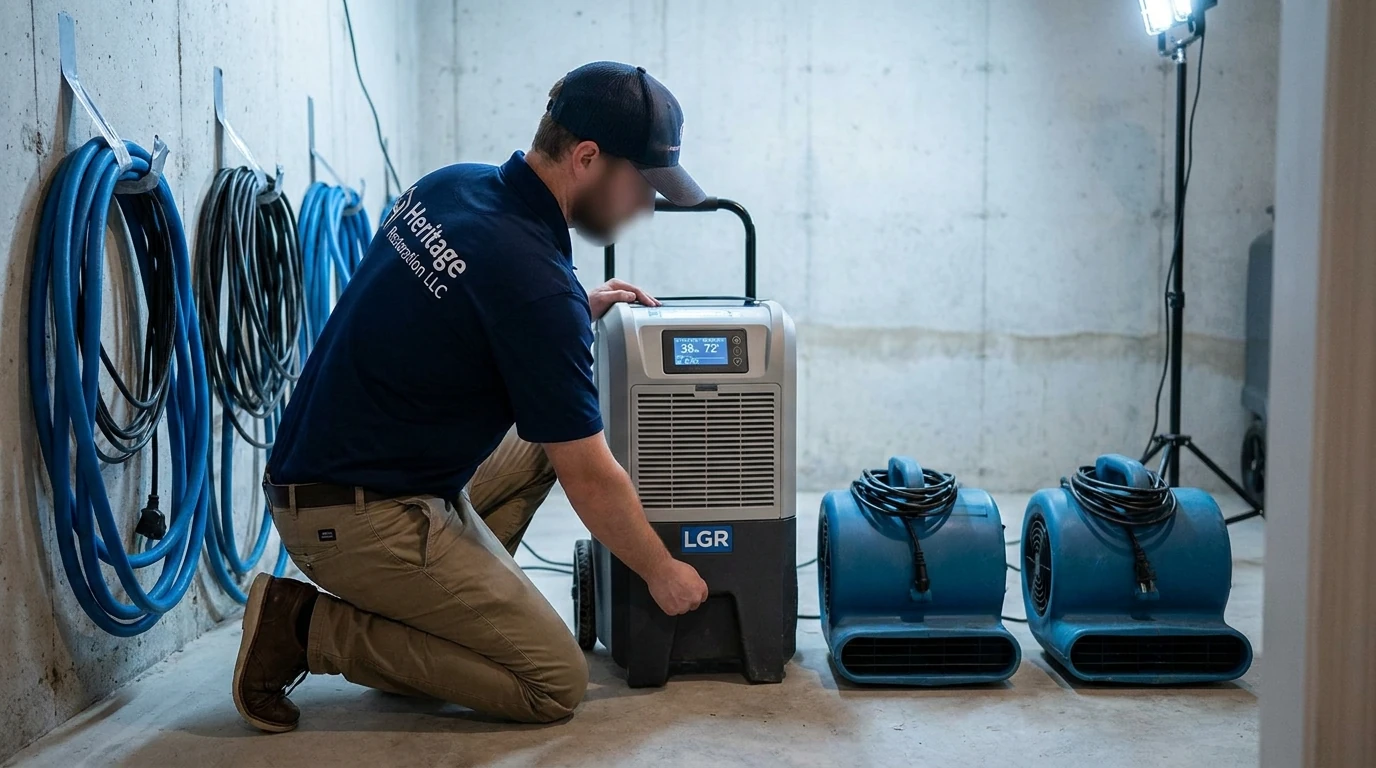
- Structural drying. Air movers and low-grain-refrigerant (LGR) dehumidifiers run for 3 to 5 days on average, with daily moisture checks to confirm materials are drying on schedule rather than trapping moisture inside wall cavities.
- Repair and reconstruction. Once materials test dry, drywall, flooring, and trim get replaced. This is where total cost often jumps, since reconstruction labor and materials are priced separately from the drying work.
For a full walkthrough of timing, how long water damage restoration actually takes covers the drying window in more detail.
If you’re dealing with water damage right now in Little Falls, St. Cloud, Brainerd, or anywhere in between, the fastest way to get an accurate number is a hands-on assessment, not a phone estimate. Request a water damage inspection and get a written scope before any work starts.
About Heritage Restoration LLC
Heritage Restoration LLC is an IICRC-certified company (WRT, ASD, FSRT, AMRT) serving Little Falls, Minnesota and the surrounding region since 2023, licensed under BC807677. Their crews handle water damage restoration, basement flooding cleanup, burst pipe repair, flood damage restoration, mold remediation, and reconstruction across central Minnesota, including St. Cloud, Brainerd, and Baxter.