
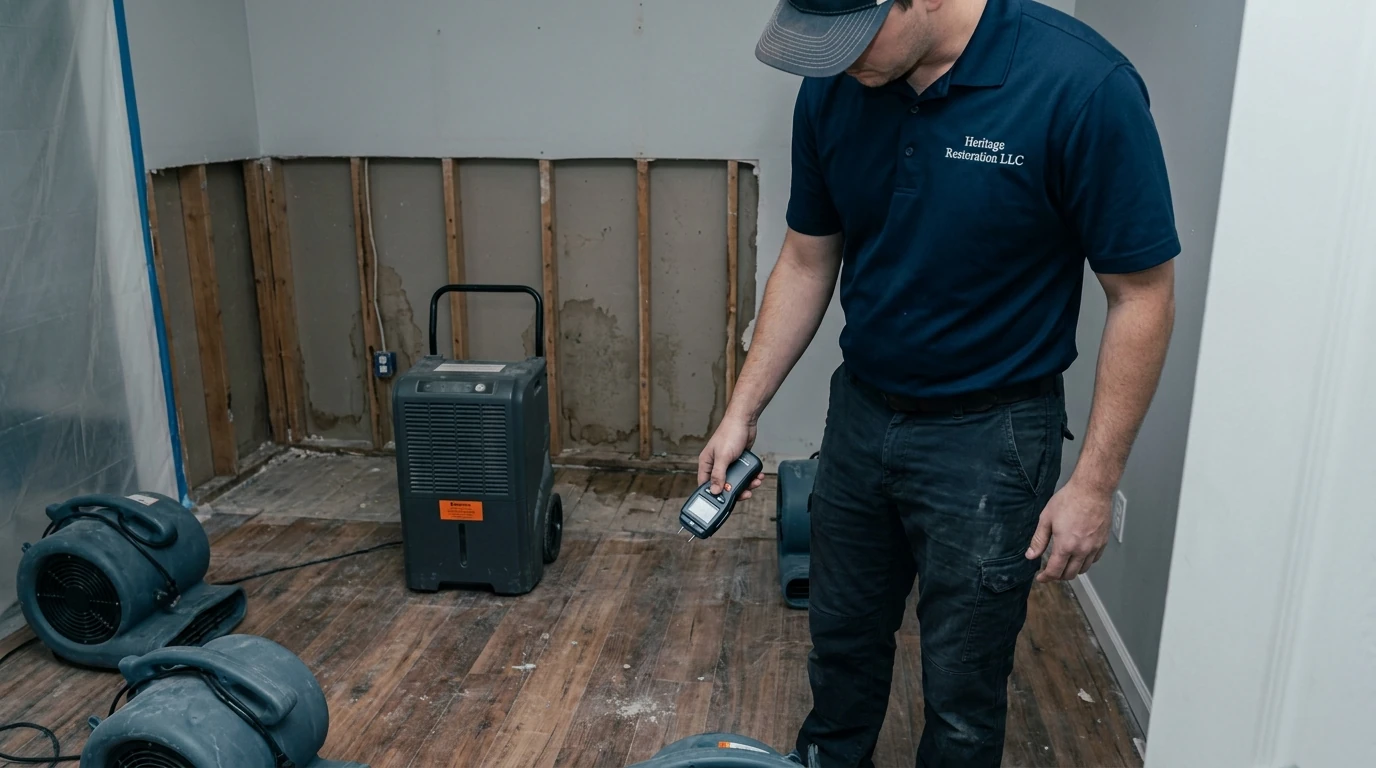
TL;DR: Walls damaged by water typically take 3 to 5 days to dry when professional-grade air movers and dehumidifiers are running continuously. That timeline comes from the IICRC S500 Standard for Professional Water Damage Restoration. Without equipment, drying can stretch to weeks, and mold can start forming in as little as 24 to 48 hours. In Brainerd and the surrounding lakes area, frozen pipe breaks and ice dam leaks are among the most common causes, and Minnesota’s cold winters add a layer of complexity that affects how you set up drying equipment.
Your walls look dry on the surface. You ran a fan for a day. But when a moisture meter touches the drywall, the reading is still in the red. This is the situation most Brainerd homeowners find themselves in after a burst pipe, a failed sump pump, or a slow leak behind a bathroom wall. Drywall absorbs water like a sponge and releases it slowly, which means the visible surface dries long before the core does. Knowing the real timeline, and what moves it faster or slower, helps you make better decisions before secondary damage sets in.
How Long Does It Take to Dry Out Walls From Water Damage?
With professional drying equipment running 24 hours a day, most residential walls dry in 3 to 5 days. That is the industry benchmark set by the IICRC S500 standard, which governs how certified restoration firms approach structural drying. The exact number depends on the water category, how long the walls were wet before drying started, and what materials are involved. A freshly soaked drywall partition in a heated room dries faster than a plaster-and-lath wall that sat wet for three days before anyone noticed.
Category 1 water, meaning clean water from a supply line or appliance, dries fastest. Category 2 (gray water from an overflowing toilet tank or dishwasher) takes longer because the contamination requires more aggressive air exchange. Category 3, also called black water, often requires removing the drywall entirely rather than drying it in place, because the contamination cannot be safely dried out of a porous material.
If you are relying on a box fan and open windows, plan for two to four weeks, not days. That is not a scare tactic. It is the physics of moisture moving through a gypsum core.
Will a Dehumidifier Pull Moisture Out of Drywall?
A dehumidifier alone will not dry wet drywall fast enough to prevent mold. Dehumidifiers remove moisture from the air, but wet drywall needs airflow moving across its surface to pull moisture out of the material and into the air first. The correct setup pairs high-velocity air movers (often called LGR air movers or axial fans) positioned at the base of the wall to create a vortex effect, with a low-grain refrigerant (LGR) dehumidifier pulling that evaporated moisture out of the room.
Professional crews use psychrometric readings, temperature and relative humidity measurements, to calculate how many air movers and what dehumidifier capacity a room needs. A single bedroom with wet walls might need two or three air movers and one LGR dehumidifier running continuously. Readings are checked daily and equipment is adjusted as the material dries. That daily monitoring is what keeps the drying on track and documents progress for your insurance claim.
Running a consumer dehumidifier by itself in a closed room will reduce ambient humidity but will not move enough air across the wall surface to hit the 3 to 5 day target. It is a useful supplement, not a replacement.
How to Draw Moisture Out of Drywall: What Actually Works
The most effective method is directed airflow plus dehumidification, with equipment sized to the affected area. Here is how a professional structural drying setup works:
- Extract standing water first. No drying equipment is effective while there is still liquid water present. Truck-mounted or portable extractors remove water from flooring and cavities before air movers are staged.
- Position air movers at the wall base. Angled at 45 degrees toward the wall, they create a circular airflow pattern that draws moisture from the drywall surface into the room air.
- Run an LGR dehumidifier continuously. LGR units pull moisture from air at lower grain levels than standard dehumidifiers, which matters in a closed, humid room.
- Seal the drying zone. Doors and windows stay closed during active drying. Bringing in outside air disrupts the controlled environment and slows the process.
- Check moisture readings daily. A calibrated pin or pinless moisture meter tracks drywall moisture content. The target is typically below 16% moisture content for standard drywall, though the IICRC S500 specifies returning materials to their normal dry standard for the region.
- Document everything. Moisture readings, equipment placement, and daily logs are what support an insurance claim if your adjuster questions the scope.
For a full breakdown of what this process looks like from day one through completion, see How Long Does Water Damage Restoration Actually Take?
How Long Should You Run a Dehumidifier After Water Damage?
Run the dehumidifier until moisture meter readings confirm the walls have returned to their pre-loss moisture content, which typically means 3 to 5 days of continuous operation in a professionally managed drying job. Stopping early because the room feels dry is one of the most common mistakes homeowners make. Drywall can feel dry to the touch while still holding 20 to 30% moisture content in its core.
For a standard bedroom or living area, plan to run equipment for the full drying cycle without interruption. Turning equipment off at night to reduce noise extends the drying time significantly and can push the job past the mold growth window. If you are renting equipment and managing the drying yourself, keep it running around the clock.
Where Should You Not Place a Dehumidifier?
Do not place a dehumidifier in a corner with its intake or exhaust blocked, against the wet wall itself, or in an adjacent room with the door closed. The unit needs clear airflow around it to work efficiently. Placing it directly against the wall it is supposed to be drying blocks the air movers’ vortex pattern and reduces effectiveness.
In Minnesota homes, another common mistake is placing a dehumidifier near an exterior door or window that gets opened during the drying cycle. Cold outside air in fall and winter carries very low humidity, which sounds helpful but disrupts the controlled drying environment and can cause condensation issues on cold surfaces. Keep the drying zone sealed.
The Minnesota Winter Factor: What Brainerd Homeowners Need to Know
Brainerd and the surrounding lakes area see a specific pattern of water damage that affects drying conditions: frozen pipe breaks. When temperatures drop in October and November, pipes in exterior walls, crawl spaces, and cabinets on exterior walls are vulnerable. A frozen pipe that bursts overnight can release hundreds of gallons before anyone notices in the morning.
The cold-weather dynamic cuts both ways for drying. On the positive side, Minnesota winter air is extremely dry, which means if you can safely introduce controlled outside air during certain phases, it can accelerate drying. On the negative side, cold temperatures slow evaporation from building materials, and homes sealed up for winter have less natural air exchange. Heating the drying zone to 70 to 80 degrees Fahrenheit improves evaporation rates and is standard practice in cold-weather structural drying.
Ice dam leaks, another common Brainerd issue, add a wrinkle because the water often enters through the ceiling and runs down inside the wall cavity before appearing at the baseboard. That means the entire wall height may be wet even if the visible damage looks limited to the bottom two feet. A thermal imaging camera can map the moisture path before equipment is staged, which prevents under-drying and a failed inspection.
If you are heading into the colder months and want to reduce your risk, 8 Ways To Prevent Basement Flooding This Season covers steps that apply to the broader water intrusion picture.
What Should You Do If Walls Are Not Drying on Schedule?
If moisture readings are not dropping after 48 hours of continuous equipment operation, something is wrong with the setup or the scope. The most common reasons are: equipment is undersized for the affected area, the water source has not been fully stopped, the wall cavity is holding water that surface airflow cannot reach, or the drywall is so saturated that it needs to come out.
In some cases, drilling small holes at the base or top of the wall cavity allows air movers to direct airflow inside the wall, which dramatically speeds up drying for cavity-wet assemblies. This is called injectidry or wall cavity drying, and it is standard practice for walls that were wet for more than 24 hours before drying started.
If the drying is stalling and you are managing an insurance claim, a written drying log showing daily readings is critical. Adjusters use that documentation to approve extended equipment rental and additional scope.
Heritage Restoration LLC holds IICRC ASD (Applied Structural Drying) and IICRC WRT (Water Damage Restoration Technician) certifications, which means their crews are trained specifically in the psychrometric calculations and equipment placement that drive the 3 to 5 day standard. They serve Brainerd, Baxter, and the surrounding central Minnesota area. For water damage restoration in Brainerd, you can reach them at (320) 733-8868 to schedule a moisture assessment.
About Heritage Restoration LLC
Heritage Restoration LLC is an IICRC-certified firm based in Little Falls, MN (license BC807677), serving Brainerd, Baxter, St. Cloud, and communities across central Minnesota since 2023. Their certified crews handle water damage restoration, fire damage restoration, storm damage restoration, emergency water cleanup, roofing, and general contracting. IICRC certifications held include WRT, ASD, FSRT, AMRT, and the firm is EPA Lead-Safe Certified. Heritage Restoration LLC is locally owned, licensed, and insured.
Video Transcript
Your walls look dry, but they’re probably not. After water damage, drywall holds moisture deep in its core long after the surface feels fine. With professional drying equipment running around the clock, most walls dry in three to five days. Without it, you’re looking at two to four weeks. And mold can start growing in as little as 24 to 48 hours. That timeline makes fast action critical. In Brainerd and the surrounding lakes area, frozen pipe bursts and ice dam leaks are the most common culprits. Minnesota winters make drying even harder. A box fan alone won’t cut it. Drywall needs high-velocity air movers pushing airflow across the wall surface to pull moisture out. Air movers work alongside a commercial dehumidifier that pulls that evaporated moisture out of the room. Both run continuously until readings confirm it’s done. A moisture meter tells the real story. Restoration professionals check readings daily, targeting below 16 percent moisture content in the drywall. Every reading gets documented. That daily log is what supports your insurance claim and proves the drying was done properly. Don’t shut equipment off at night to save noise. Stopping early extends drying time and risks pushing you past the mold window. If your walls took on water, don’t wait. Call Heritage Restoration LLC at 320-733-8868 for a free estimate. Fast response protects your home.